
Black Canadian literature offers readers a powerful journey through fiction, memoir, poetry, and non-fiction that illuminates the diverse experiences of Black communities across the country. From urban Toronto narratives to Prairie histories, from Caribbean-Canadian identity explorations to African diasporic connections, these works reveal stories that have shaped Canada’s ongoing journey toward multicultural success. This curated collection brings together essential voices spanning generations, offering perspectives that challenge, inspire, and expand our understanding of what it means to be Black and Canadian.
The selection process prioritized works that have earned critical recognition, shaped cultural conversations, and demonstrated lasting impact on Canadian literature. You’ll find Governor General’s Award winners alongside debut authors making waves, classic titles that established Black Canadian literary tradition, and recent releases pushing boundaries. Each book on this list offers something distinct: some provide windows into historical Black Canadian communities often overlooked in mainstream narratives, others grapple with contemporary questions of identity and belonging, while several use innovative literary forms to tell stories that resist traditional categorization.
Whether you’re an educator building a syllabus, a reader seeking to broaden your literary horizons, or someone looking to support Black Canadian authors, this guide provides starting points across genres and themes. These books deserve space on every Canadian bookshelf.
How We Curated This Collection
Choosing fifteen books from the wealth of Black Canadian literature meant establishing clear, thoughtful criteria. We didn’t aim for a definitive canon, such a thing would be impossible, but rather a collection that captures the range and richness of Black voices shaping Canadian culture.
Our selection balanced several priorities:
- Literary impact and critical recognition within Canadian arts
- Cultural authenticity rooted in genuine Black Canadian experiences
- Genre diversity spanning fiction, memoir, poetry, and social commentary
- Historical significance in documenting overlooked narratives
- Accessibility to readers new to these conversations
We sought representation across Black Canadian communities, African-Canadian, Caribbean-Canadian, East African diaspora, recognizing that “Black Canadian” encompasses many distinct cultural threads. The list includes established literary giants alongside powerful emerging voices, classics that have reshaped Canadian discourse and recent works pushing boundaries. Some titles here have won major awards; others matter for different reasons entirely.
This collection deliberately mixes genres because Black Canadian literature resists easy categorization. A historical novel can be as revelatory as academic analysis, a poetry collection as urgent as memoir. We prioritized works that invite readers in, regardless of their starting point, while maintaining substance and depth. Think of these fifteen as doorways into a much larger literary landscape.
The Books: 15 Essential Black Canadian Works
1. The Book of Negroes by Lawrence Hill
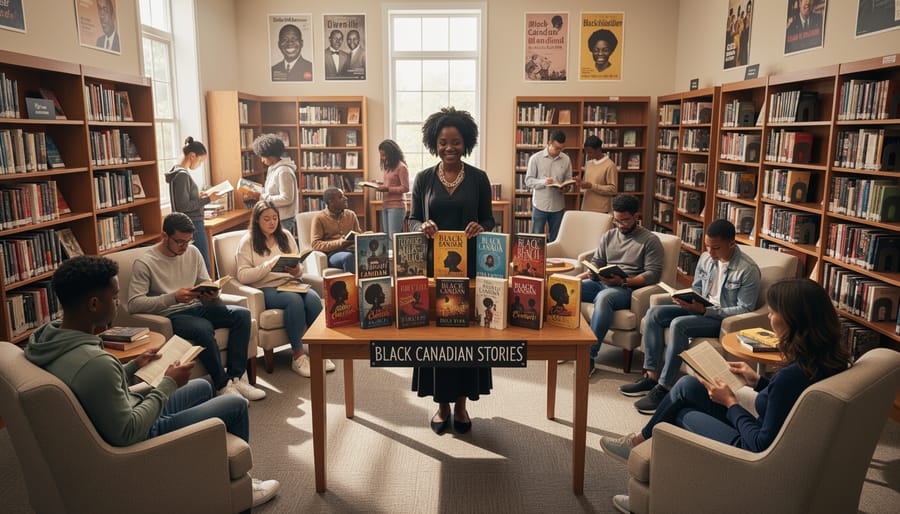
Lawrence Hill’s The Book of Negroes stands as a landmark in Canadian historical fiction, tracing the extraordinary life of Aminata Diallo from her childhood in West Africa through enslavement in South Carolina to eventual freedom in Nova Scotia and Sierra Leone. The novel draws its title from the historical document that recorded Black Loyalists who fought for Britain during the American Revolution and were granted passage to Canada.
Hill’s meticulous research illuminates a chapter of Canadian history often overlooked: the arrival of approximately 3,000 Black Loyalists to Nova Scotia in the 1780s. Through Aminata’s eyes, readers witness not only the brutality of the transatlantic slave trade but also the complex negotiations of identity and belonging that defined early Black Canadian communities. The novel sparked international conversations about diaspora, memory, and the African experience across continents, winning the Commonwealth Writers’ Prize and becoming a global bestseller that challenged simplistic narratives about Canada’s racial past.
2. Brother by David Chariandy
David Chariandy’s Brother stands as one of the most emotionally resonant explorations of Black masculinity and immigrant life in contemporary Canadian fiction. Set in Scarborough during the 1990s, the novel follows Michael and his older brother Francis, two sons of Trinidadian immigrants navigating a neighbourhood marked by both vibrant multiculturalism and systemic neglect.
Chariandy captures the tenderness between brothers while unflinching confronting the violence that shapes their world. The narrative moves between past and present, gradually revealing a tragedy that reshapes Michael’s understanding of family, loss, and survival. Through spare, lyrical prose, the author portrays how police surveillance, economic marginalization, and limited opportunities constrain young Black men’s lives, even as community bonds and cultural pride offer spaces of resistance and joy.
Winner of the Rogers Writers’ Trust Fiction Prize and the Ethel Wilson Fiction Prize, Brother has garnered international acclaim for its intimate portrayal of what it means to grow up Black in Canada’s urban margins.
3. The Skin We’re In by Desmond Cole
Desmond Cole’s The Skin We’re In dismantles the comforting myth that Canada stands apart from American racism. Published in 2020, this scholarly and accessible work chronicles twelve months of anti-Black racism across the country, each chapter anchored to a specific incident or pattern Cole witnessed or investigated. From carding practices in Toronto to the overrepresentation of Black children in foster care, he documents systemic oppression with unflinching clarity. What makes the book essential is Cole’s refusal to let readers retreat into denial. He connects historical injustices to present-day policies, showing how anti-Blackness operates through institutions Canadians trust: police, schools, child welfare agencies. The month-by-month structure creates mounting evidence that these aren’t isolated incidents but coordinated patterns. For readers seeking to understand contemporary Black Canadian experiences beyond polite multiculturalism, Cole’s journalism offers necessary, uncomfortable truth-telling that has reshaped national conversations about race.
4. Africville by Jeffrey Colvin
Jeffrey Colvin’s Africville traces three generations of the Sebolt family against the backdrop of the historic Black settlement in Halifax. The novel moves between 1930s Africville and the American South, revealing how place shapes identity and survival. Colvin captures the community’s tight-knit bonds through daily rituals, church gatherings, and shared resistance against encroaching threats.
What distinguishes this work is its lyrical attention to landscape and memory. Colvin renders Africville not as a victim narrative but as a living, breathing community with its own rhythms and dignities. The forced displacement in the 1960s, when bulldozers razed homes and scattered families, becomes both historical tragedy and metaphor for broader Black Canadian experiences of erasure.
The novel refuses to let Africville exist only as loss. Through Omar Sebolt’s journey and his descendants’ reckonings, Colvin shows how communities persist in memory, story, and the determination of those who refuse to forget. It’s an essential portrait of resilience that honours what was destroyed while insisting on what endures.
5. Policing Black Lives by Robyn Maynard
Robyn Maynard’s Policing Black Lives: State Violence in Canada from Slavery to the Present stands as one of the most important works of contemporary Canadian non-fiction. Published in 2017, this meticulously researched book dismantles the myth that Canada is somehow immune to the anti-Black racism plaguing other nations. Maynard traces a direct line from historical enslavement through to modern surveillance, incarceration, and police violence against Black communities.
What makes this work essential is its combination of rigorous scholarship with accessible prose. Maynard doesn’t just document injustice, she provides historical context that helps readers understand how systemic oppression operates across generations. The book examines child welfare interventions, immigration policies, and criminal justice practices that disproportionately target Black Canadians, making visible what many prefer to ignore.
For anyone seeking to understand contemporary movements for racial justice in Canada, Policing Black Lives is required reading. It has become a foundational text in university courses and community discussions alike, challenging Canadians to confront uncomfortable truths about their nation’s past and present.
6. Hunting Humans by Michael Sims

Michael Sims’ debut poetry collection confronts the raw realities of Black masculinity in urban Canada with unflinching honesty. Through visceral imagery and rhythmic power, Sims examines the intersections of race, violence, and identity that shape young Black men’s lives in Canadian cities. His poems don’t shy away from difficult subjects, they dive into the tensions between vulnerability and survival, the weight of stereotypes, and the complex navigation of public spaces where Black bodies are simultaneously hypervisible and unseen.
What makes Hunting Humans essential is its authentic voice. Sims writes from lived experience, capturing the particular pressures facing Black men in Canada with sharp observation and emotional depth. The collection moves between anger and tenderness, documenting both systemic challenges and intimate moments of humanity. His work represents a vital strand in contemporary Black Canadian poetry, proving that verse can be both aesthetically powerful and socially urgent while speaking directly to experiences often marginalized in mainstream Canadian literature.
7. What We All Long For by Dionne Brand
Dionne Brand stands as one of Canada’s most celebrated literary voices, and What We All Long For captures the essence of contemporary multicultural Toronto through four interconnected young lives. The novel follows Tuyen, Carla, Jackie, and Oku, children of immigrants from diverse backgrounds, as they navigate their twenties in a city shaped by their parents’ dreams and traumas.
Brand masterfully weaves together their stories of artistic ambition, romantic entanglement, and the weight of family history they carry whether they want to or not. The narrative pulses with the energy of Queen Street West and Kensington Market, grounding larger questions of belonging in specific Toronto geography. What makes this work essential is Brand’s unflinching examination of how second-generation Canadians forge identities between worlds, neither fully embracing nor rejecting their inherited cultures.
Brand’s poetic prose elevates the material beyond typical coming-of-age narratives, offering meditations on displacement, desire, and the meaning of home in a city constantly reinventing itself.
8. The Book of Secrets by M.G. Vassanji
M.G. Vassanji’s The Book of Secrets won the Giller Prize in 1994, establishing itself as a landmark in Canadian diaspora literature. The novel unfolds through a retired schoolteacher in Dar es Salaam who discovers the diary of a British colonial administrator, revealing interconnected stories of East African Indian communities from colonial times through their migration to Canada.
While Vassanji himself is of Indian ancestry, this novel illuminates the complex tapestry of East African identity, where Indian, Arab, and African communities historically intertwined. The book demonstrates how Black Canadian literature encompasses more than singular narratives, it includes the experiences of Black East Africans whose stories intersect with other diaspora communities.
The novel’s exploration of cultural memory, displacement, and the search for belonging resonates across BIPOC experiences in Canada. It challenges simplified notions of identity by showing how colonialism, migration, and mixed communities shape who we become. For readers exploring Black Canadian voices, Vassanji’s work offers crucial perspective on the diverse pathways through which African stories reach and enrich Canadian culture.
9. Sleep Well, My Lady by Abdi Latif Ega
Sleep Well, My Lady offers a haunting exploration of a Somali-Canadian family unraveling under the weight of mental illness and displacement. Abdi Latif Ega’s debut novel follows the Mahad family in Ottawa as they navigate the mother’s deteriorating mental health while grappling with the trauma of civil war, migration, and cultural isolation. The narrative moves between perspectives, revealing how each family member, father, mother, son, experiences dislocation differently yet remains bound by shared grief.
Ega writes with raw honesty about the silence surrounding mental health in immigrant communities, the inadequacy of healthcare systems for those who don’t speak the language, and the collision between traditional beliefs and Western psychiatry. The novel captures the particular loneliness of refugee families who’ve survived war only to face new battles in their supposed sanctuary. Through spare, precise prose, Ega illuminates the East African diaspora experience in Canada while addressing universal themes of caregiving, loss, and the fracturing of identity across borders.
10. The Hanging of Angélique by Afua Cooper
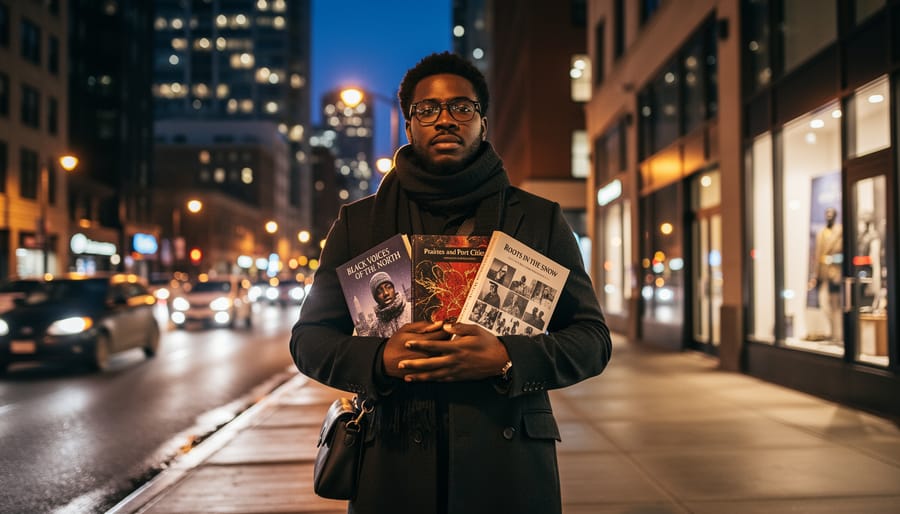
Afua Cooper’s The Hanging of Angélique: The Untold Story of Canadian Slavery and the Burning of Old Montréal (2006) shattered the comfortable myth that slavery was exclusively an American institution. Through meticulous archival research, Cooper reconstructs the life and death of Marie-Joseph Angélique, an enslaved Black woman accused of setting fire to Montreal in 1734. The book reveals how slavery was legal and practiced in New France and later Canada for over two centuries, with thousands of Indigenous and African people held in bondage.
Cooper’s work goes beyond Angélique’s individual story to expose the systematic erasure of this history from Canadian collective memory. She traces how enslaved people resisted their conditions, how colonial laws sanctioned their oppression, and how this legacy continues to shape race relations today. By bringing Angélique’s name and struggle into public consciousness, Cooper created an essential text for understanding the foundations of anti-Black racism in Canada and challenged the nation’s self-image as a haven of freedom.
11. Washington Black by Esi Edugyan
Washington Black tells the extraordinary story of an eleven-year-old field slave on a Barbados sugar plantation whose life transforms when he becomes the servant of Christopher Wilde, the plantation owner’s eccentric brother. When circumstances force their escape, Washington embarks on a globe-spanning adventure that takes him from the Caribbean to the Arctic, eventually reaching Nova Scotia, where questions of freedom, belonging, and self-determination take on new complexity.
Esi Edugyan, a two-time Giller Prize winner, crafted a narrative that’s both thrilling adventure and profound meditation on what freedom truly means when your former identity was property. The novel examines how Washington must repeatedly define himself against others’ projections, as curiosity, as subject, as artist, while searching for a place and identity entirely his own.
Set partially in 19th-century Canada, the novel complicates simplistic narratives about the country as a refuge, showing how freedom existed on a spectrum even in places without formal slavery. Edugyan’s lush prose and complex characterization earned the book spots on the Man Booker Prize shortlist and widespread international acclaim, cementing her status as one of Canada’s most celebrated contemporary novelists.
12. Zong! by M. NourbeSe Philip
M. NourbeSe Philip’s Zong! stands as one of the most formally daring works in Canadian poetry. This experimental collection reconstructs the 1781 Zong massacre, when enslaved Africans were thrown overboard so ship owners could claim insurance, using only words from the legal decision Gregson v. Gilbert. Philip fractures, rearranges, and drowns these legal terms on the page, creating a haunting visual and linguistic seascape where meaning disintegrates and reassembles. The fragmented text forces readers into an uncomfortable, disorienting encounter with atrocity, mirroring the chaos and horror experienced by the murdered. Through this radical approach to creative learning and historical testimony, Philip challenges conventional narrative forms that sanitize slavery’s violence. Zong! refuses to let readers consume tragedy comfortably; instead, it demands we sit with the weight of erasure, the limits of language in conveying suffering, and the persistence of memory even when official records reduce people to legal property and cargo.
13. I’ve Been Meaning to Tell You by David Chariandy
In this intimate memoir, Chariandy shifts from fiction to direct address, writing a letter to his daughter about the realities of being Black in Canada. The book weaves personal family history with broader reflections on racism, identity, and the weight of inheritance that Black parents carry when raising children in a country that often refuses to acknowledge its own prejudices.
What makes this work particularly powerful is its vulnerability. Chariandy doesn’t shy from difficult truths about the microaggressions, systemic barriers, and moments of exclusion that shape Black Canadian lives. Yet he also celebrates resilience, community, and the beauty of their shared heritage. The letter format creates rare tenderness in discussions of race, offering both warning and hope.
For readers seeking to understand intergenerational conversations about Blackness in Canada, this memoir provides a deeply moving entry point that balances scholarly insight with parental love.
14. The Stone Thrower by Jael Richardson
In The Stone Thrower: A Daughter’s Lesson, a Father’s Life, Jael Richardson crafts an intimate memoir that bridges the gap between a daughter seeking connection and a father guarding painful secrets. Her father, Chuck Ealey, was a celebrated quarterback who led his high school team to an unprecedented winning streak before systemic racism blocked his path to the NFL. He came north to play in the CFL, where he thrived professionally while struggling privately with the weight of what had been denied him. Richardson weaves her own journey of identity formation as a Black Canadian woman with her father’s story of resilience and silence. The memoir moves beyond typical sports narratives to examine how racism shapes family dynamics across generations, how cultural displacement affects mental health, and what it means to find belonging when your parent’s experience of Canada differs sharply from your own. Richardson’s prose is both tender and unflinching, offering readers a deeply personal window into the complexities of Black Canadian family life.
15. Scarborough by Catherine Hernandez

Catherine Hernandez’s Scarborough offers a tender, unflinching portrait of a Toronto neighbourhood often dismissed or stigmatized in mainstream narratives. Through interconnected stories centered on three children navigating poverty, abuse, and systemic neglect, Hernandez illuminates the strength found in community bonds and the fierce dedication of those who serve marginalized populations.
The novel weaves together the lives of Filipino, Black, and queer characters, creating a tapestry that reflects Scarborough’s actual diversity while challenging single-story representations of struggling communities. Hernandez, drawing on her own experience as a community arts educator, brings authenticity to scenes set in community centres and classrooms where small acts of care become lifelines.
What distinguishes Scarborough is its refusal to exploit trauma for sentiment. Instead, it honours the resilience, creativity, and joy that persist alongside hardship. The novel’s chorus of voices demonstrates how Black Canadian literature intersects with broader BIPOC narratives, recognizing that experiences of marginalization and resistance often transcend single identity categories while remaining grounded in specific cultural contexts.
Beyond This List: Exploring More Black Canadian Literature
This collection represents just fifteen works from a rich and rapidly expanding literary landscape. Black Canadian authors continue to publish groundbreaking fiction, poetry, memoir, and criticism every year, each adding new dimensions to the national conversation about identity, history, and belonging shaped by immigration policies and lived experiences.
To deepen your exploration, seek out independent bookstores like A Different Booklist in Toronto or Octopus Books in Ottawa, which curate diverse Canadian titles and host author events. Literary festivals such as the Toronto International Festival of Authors, Word on the Street, and local library programming frequently spotlight Black Canadian voices through readings, panels, and workshops.
Online, platforms like CBC Books, 49th Shelf, and literary journals including Brick and The Puritan regularly feature reviews and interviews with Black Canadian writers. Follow contemporary voices like Téa Mutonji, Canisia Lubrin, Tanya Talaga, and Kai Cheng Thom, whose recent and forthcoming works push genre boundaries and explore new facets of Black Canadian experience. This literary tradition grows stronger with each new voice, each story claiming space in the national imagination.
Why These Voices Matter
These books do more than tell stories, they rewrite the narrative of what it means to be Canadian. For too long, Black Canadian voices were marginalized in national conversations about identity, history, and belonging. This literature challenges the myth of Canada as merely a refuge from American racism, revealing instead the complex realities of anti-Black violence, systemic barriers, and resilient communities that have shaped this country for centuries.
Black Canadian authors bring perspectives that expand our collective understanding of Canadian culture, from the East African diaspora in Toronto to the historic roots of Africville, from the hidden history of slavery to contemporary fights for justice. Their work enriches the broader tapestry of books by Canadian BIPOC authors that Multi Culti Canada celebrates, each voice adding depth to our shared cultural heritage.
When you read these books, you’re participating in a vital cultural conversation. Support these authors by buying their work, recommending titles to friends, requesting them at libraries, and engaging with their ideas. These stories deserve to be heard, discussed, and passed forward.
Frequently Asked Questions
Where can I find these Black Canadian books?
Most titles on this list are available through major Canadian bookstores, public libraries, and independent booksellers specializing in diverse literature. Look for local bookstores with dedicated Canadian literature or BIPOC author sections, which often host reading events and author signings that strengthen community connections.
How can I support Black Canadian authors beyond buying their books?
Attend literary festivals and author talks, request their books at your local library (which influences purchasing decisions), share reviews on social media and Goodreads, and gift these titles to friends and family. You can also support organizations promoting multicultural education and diverse Canadian voices in classrooms and communities.
Do Black Canadian experiences differ by region?
Absolutely. Black communities in Nova Scotia trace roots to Black Loyalists and Africville’s history, while Toronto and Montreal reflect more recent Caribbean and African immigration patterns, and Prairie cities have growing East African populations. These regional differences shape the stories authors tell and the cultural contexts they explore.
Where should I start if I’m new to Black Canadian literature?
Begin with whatever genre speaks to you. If you enjoy historical fiction, try “The Book of Negroes.” For contemporary social commentary, start with “The Skin We’re In.” Poetry lovers might gravitate toward “Zong!” The best entry point is the one that matches your reading preferences, letting the content draw you deeper into this rich literary tradition.
What distinguishes Black Canadian literature from other BIPOC voices in Canada?
While all BIPOC authors navigate questions of belonging and identity in Canada, Black Canadian writers specifically grapple with the legacy of transatlantic slavery, anti-Black racism’s particular manifestations, and distinct community histories like the Underground Railroad and Black Loyalist settlements. Recognizing these unique threads doesn’t diminish intersections with other experiences but honors the specificity of Black Canadian stories.
These questions reflect the genuine curiosity readers bring when they first encounter this body of work. Many people grew up believing Canada had no history of slavery or racial injustice, making works like “The Hanging of Angélique” and “Policing Black Lives” revelatory. Others want practical guidance on building their personal libraries or supporting authors they’ve newly discovered.
The beauty of this literary landscape is that it welcomes every level of familiarity. Whether you’re reconnecting with stories from your own community, educating yourself about experiences different from your own, or simply seeking compelling narratives that happen to be rooted in Black Canadian life, these books offer entry points. They challenge, comfort, enlighten, and entertain in equal measure.