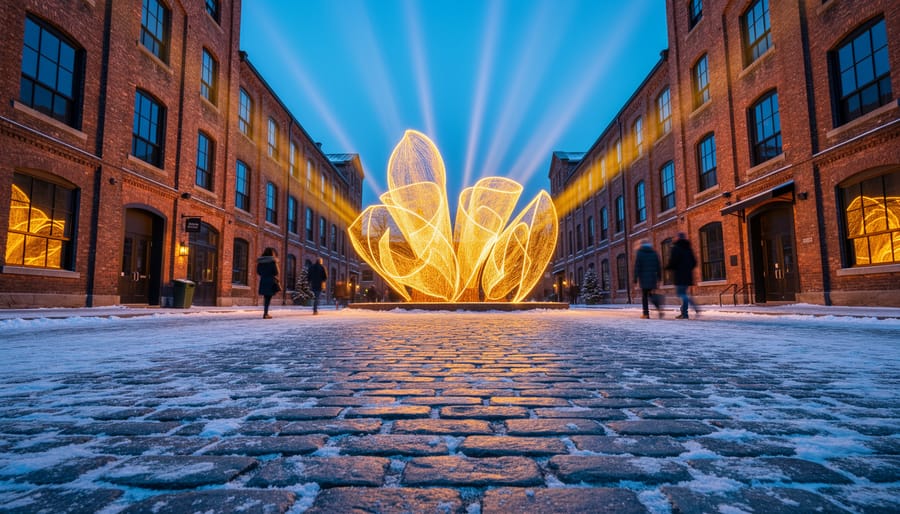
The Toronto Light Festival illuminates the city’s winter nights for approximately three weeks each January, typically running from mid-month through early February. This timing transforms the coldest stretch of the Canadian calendar into a luminous celebration, deliberately positioned when long evenings and crisp air create the ideal canvas for outdoor light installations across the Distillery Historic District.
Weather patterns and daylight hours shape the festival’s annual schedule. Organizers anchor the event after the holiday season winds down, when Torontonians and visitors alike crave a cultural reason to embrace winter rather than simply endure it. The extended darkness, with sunset arriving before 5:30 PM throughout January, offers maximum viewing time for the projected animations, interactive sculptures, and immersive light environments that define the experience.
Planning your visit means accounting for variables beyond the posted dates. Opening weekends draw the largest crowds, while weeknights offer breathing room to photograph installations without dodging selfie sticks. Severe cold snaps can reduce attendance but intensify the visual drama, with light refracting through ice crystals in ways mild evenings never produce. The festival has evolved since launching in 2016, growing from a local winter antidote into an internationally recognized showcase that draws artists from across Canada and beyond, each contributing perspectives that reflect Toronto’s multicultural character through the universal language of light.
When Does the Toronto Light Festival Take Place?
The Toronto Light Festival typically runs from late January through early March each year, spanning approximately five to six weeks during the heart of Toronto’s winter season. The festival operates nightly throughout this period, with installations illuminated from dusk until around 10:00 PM on weekdays and extending to 11:00 PM on Friday and Saturday evenings.
Most visitors spend between 90 minutes and two hours experiencing the full festival, though you can move at your own pace. The outdoor installations in the Distillery District remain accessible throughout operating hours, allowing you to arrive at whatever time suits your schedule within the evening window.
The specific start and end dates shift slightly each year based on venue coordination and weather forecasting, but the festival consistently anchors itself in the coldest stretch of Toronto’s winter. This timing isn’t arbitrary, the longer darkness of January and February nights provides the ideal canvas for light-based art installations, with the sun setting around 5:30 PM and creating extended evening viewing opportunities.
Since exact dates vary annually, checking the official festival website in December or early January gives you the most accurate schedule for planning your visit. The festival typically announces dates two to three months in advance, allowing both local residents and visitors to build their winter plans around this illuminated celebration.
Understanding the Festival Schedule & Timing Windows
Nightly Operating Hours
The festival’s light installations illuminate each evening as dusk falls, typically around 5:00 PM during the late January to early March period. The displays remain lit until approximately 10:00 PM on weeknights and 11:00 PM on Fridays and Saturdays, though these hours can shift slightly depending on the specific year and weather conditions.
Most visitors spend between 90 minutes and two hours exploring the illuminated installations throughout the Distillery District. This timeframe allows for a leisurely walk through the historic cobblestone streets, pausing at each light sculpture and interactive display. Families with young children often complete their visit in under 90 minutes, while photography enthusiasts and couples may linger for three hours or more, especially on quieter weeknights.
The installations look their most dramatic during the first hour after they’re switched on, when the contrast between fading daylight and artificial light creates depth and atmosphere. Arriving right at opening means catching this transition, though it also coincides with early-evening crowds on weekends. Later hours, particularly after 8:30 PM on weekdays, offer a more intimate viewing experience with fewer people navigating the pathways.
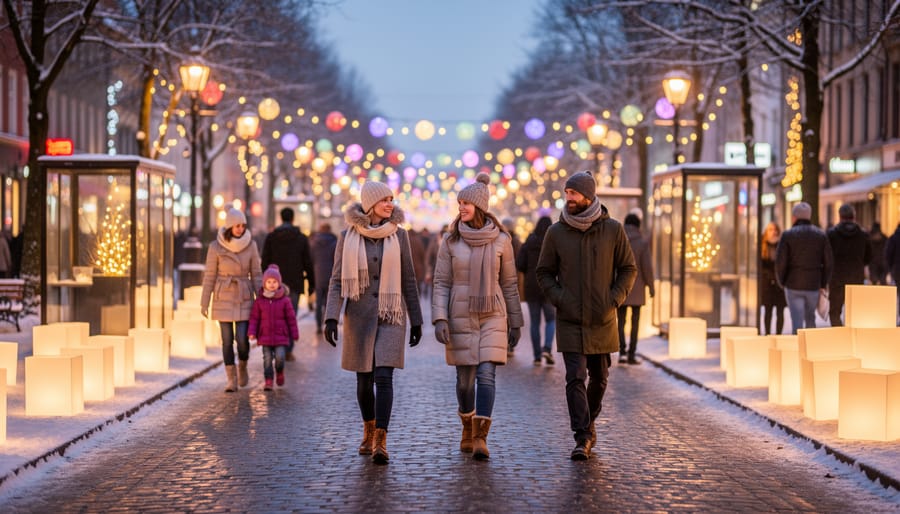
Best Times to Visit for Different Experiences
The festival offers distinct experiences depending on when you visit during the evening hours, so aligning your timing with your priorities can shape your experience.
Avoiding Crowds
Weekday evenings between opening and 7:30 PM tend to be quietest, especially Tuesday through Thursday. The first hour after gates open provides the most spacious viewing conditions for those who prefer a contemplative pace. Late February also sees lighter attendance than peak January weekends.
Photography Enthusiasts
The “blue hour” immediately after sunset delivers the most balanced ambient light for capturing installations with rich sky tones rather than flat black backgrounds. Midweek visits mean fewer people inadvertently walking into your frame. Arriving right at opening gives you that golden window before crowds build, and colder weeknight temperatures often produce clearer air for sharper shots.
Family-Friendly Visits
Early evening on weekends works best for families with young children, arriving around 6 PM allows kids to experience the spectacle before fatigue sets in, and you’ll typically exit by 8 PM. Fridays are busier than Saturdays or Sundays but offer slightly extended weekend energy without the heaviest crowds. Mid-February school break weeks see more families, which creates a livelier atmosphere some prefer.
Romantic Evenings
Later weeknight hours after 8:30 PM provide intimate viewing conditions with thinner crowds and a more contemplative mood. The coldest evenings paradoxically offer the best romantic experience, fewer visitors, crisper installations, and a shared warmth-seeking adventure.
Factors That Influence Festival Timing & Dates
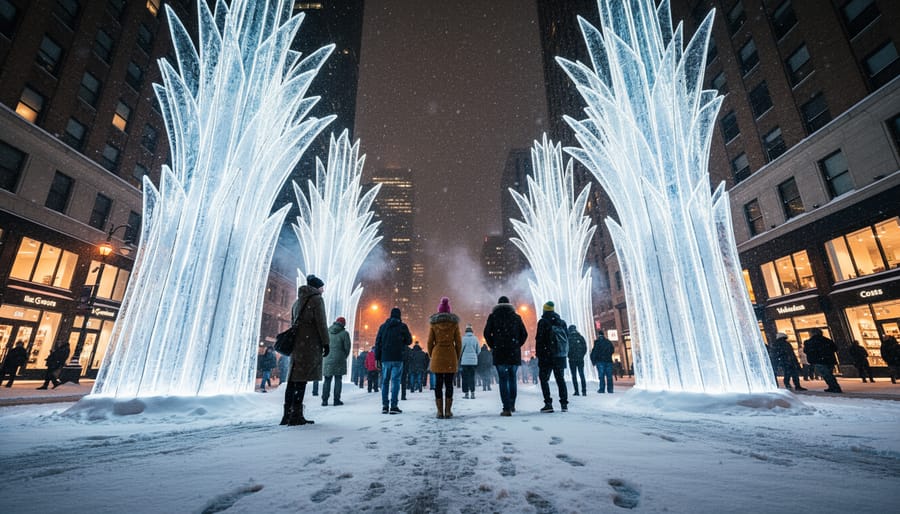
The Toronto Light Festival’s timing emerges from a careful choreography of practical logistics, weather patterns, and cultural strategy rather than arbitrary dates. Organizers must balance multiple competing factors to create the optimal window for both artistic presentation and visitor experience.
Winter weather patterns play the defining role in scheduling. The festival deliberately targets late January through early March because this period offers the longest darkness hours for viewing illuminated installations, with sunset occurring between 5:00 and 6:00 p.m. throughout the run. However, organizers must account for Toronto’s unpredictable winter conditions, where temperature swings from minus fifteen to above freezing can occur within days. Extreme cold snaps below minus twenty Celsius threaten both equipment functionality and visitor safety, occasionally forcing adjusted hours. Meanwhile, heavy snowfall can enhance the magical atmosphere but also complicates accessibility and installation maintenance. The festival avoids December entirely despite its appeal, as the holiday season already saturates Toronto’s event calendar and the Distillery District itself hosts separate Christmas market programming.
Several interconnected factors shape the final schedule:
- Winter darkness duration providing 12-14 hours of nighttime from 5 p.m. onwards for optimal light display visibility
- Distillery District partnerships requiring coordination with the historic site’s commercial tenants and year-round programming
- Cultural event coordination to avoid conflicts with major Toronto festivals like Winterlicious and Nuit Blanche
- Installation preparation time needed for artists to construct and test complex light works in harsh conditions
- Municipal permits and public safety approvals that require fixed application deadlines months in advance
The venue itself influences timing decisions. The Distillery District’s cobblestone streets and Victorian-era architecture require special considerations for electrical installations and foot traffic management. Organizers must work around the district’s restaurant and retail operations, which depend on festival crowds but also need predictable business planning windows. This partnership dynamic means dates get finalized eight to ten months ahead, limiting flexibility to respond to weather forecasts or competing events.
Canadian winter festivals face unique vulnerability to weather disruptions that festivals in milder climates rarely encounter. While the Toronto Light Festival has maintained its schedule reliably, other major Canadian outdoor events have experienced storm cancellation impacts that organizers study when planning contingencies. This awareness shapes conservative scheduling that builds in weather buffers and avoids the most volatile winter weeks in late January.
Planning Your Visit: What to Know Before You Go

How to Find Current Year Dates
The festival’s dates shift slightly each year, so checking official sources ensures you have accurate information for your visit. Start with the Toronto Light Festival’s official website, which typically posts the upcoming season’s dates by late fall. Sign up for their email newsletter to receive announcements as soon as dates are confirmed, usually several months before the festival opens.
Follow the festival’s social media accounts on Instagram, Facebook, and Twitter for real-time updates about schedule changes, weather-related adjustments, or extended hours. The Distillery District’s website also publishes festival information, including any modifications to operating times.
For last-minute planning, call the Distillery District visitor information line or check tourism websites like Tourism Toronto and Destination Ontario, which maintain updated event calendars. These resources often list not just dates but also special programming nights or themed evenings.
Set a reminder for November each year to check for the next season’s announcement. This timing gives you the best chance to secure accommodations at reasonable rates and plan your trip before the festival becomes widely publicized. Many locals bookmark the official site and check back monthly starting in autumn to catch early bird ticket offers.
Seasonal Considerations for Your Visit
Toronto winters during the festival period can be harsh, with temperatures typically ranging from -10°C to -5°C (14°F to 23°F), though cold snaps can push them lower. Wind chill makes the air feel significantly colder, especially in the open spaces of the Distillery District where the festival takes place.
Dress in insulated winter boots with good traction, as pathways can be icy. A warm parka, thermal underlayers, and waterproof outer shell protect against both cold and potential snow. Don’t forget a hat that covers your ears, insulated gloves, and a scarf or neck warmer. The outdoor viewing means constant exposure to the elements, unlike ducking in and out of shops.
Pack lip balm and moisturizer since dry winter air can be uncomfortable. If you wear glasses, keep a cloth handy to wipe condensation when moving between heated indoor spaces and outdoor installations. While the festival’s beauty makes the cold worthwhile, under-dressing can cut your visit short and diminish the experience. Toronto winters demand respect, but proper preparation lets you focus on the spectacular light displays rather than discomfort.
The Cultural Context: Why Winter Timing Matters
The Toronto Light Festival occupies a deliberately carved-out space in Canada’s cultural calendar, addressing what many northern cities struggle with: keeping communities engaged during the season when darkness arrives early and temperatures plunge. In Toronto, where sunset occurs around 5 PM in late January and windchill regularly pushes below minus 20 Celsius, creating compelling reasons for people to venture outdoors becomes an act of cultural defiance against winter’s isolating tendencies.
This timing connects to centuries-old traditions across cultures that have used light as a symbol of hope, renewal, and community gathering during the darkest part of the year. From Diwali to Hanukkah to Lunar New Year celebrations, light festivals mark turning points and bring people together when natural darkness dominates. The Toronto Light Festival builds on this universal human impulse while reflecting Canada’s multicultural identity showcasing artists from various backgrounds whose work draws on different cultural relationships with light, colour, and public space.
The festival also serves an economic and social function for the Distillery District and surrounding neighbourhoods. Winter typically represents a slower period for tourism and street-level activity. By programming a major cultural draw during these months, the festival demonstrates how arts initiatives contribute to year-round urban vitality, a principle that aligns with Toronto’s reputation for multicultural success through inclusive public programming.
The educational dimension matters too. Many installations incorporate themes that resonate with multicultural art education introducing visitors to contemporary art practices while making the experience accessible to families and those who might not typically visit galleries during colder months.
Other Light Festivals & Events in the Toronto Calendar
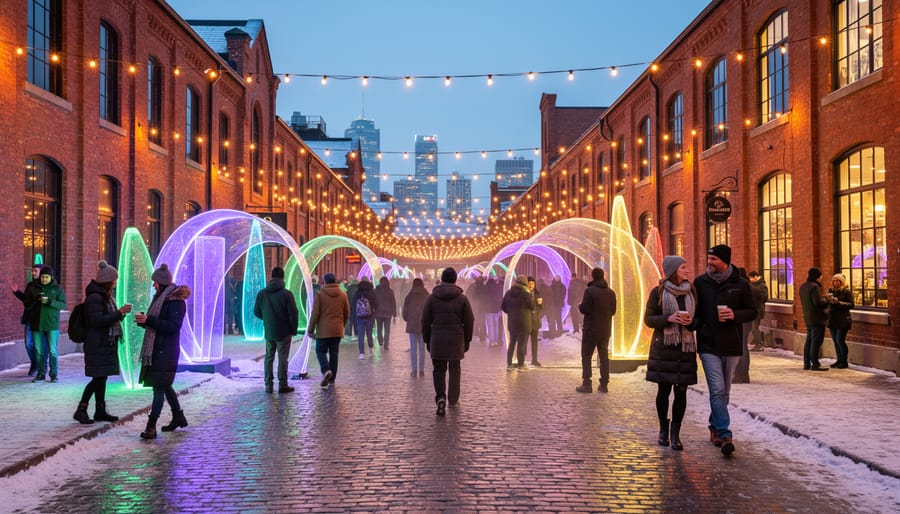
While the Toronto Light Festival claims winter as its signature season, the city’s calendar pulses with light-based celebrations throughout the year. Understanding these complementary events reveals Toronto’s commitment to illumination as a form of public art and helps visitors plan multi-season cultural experiences.
- Nuit Blanche
- Held annually in late September or early October, this dusk-to-dawn contemporary art event transforms the entire city into a gallery, featuring large-scale light installations, projections, and interactive artworks across multiple zones. Runs overnight from sunset to sunrise.
- Cavalcade of Lights
- Toronto’s official Christmas tree lighting ceremony takes place in late November at Nathan Phillips Square, marking the start of the holiday season with a spectacular fireworks display, outdoor skating, and illuminated decorations that remain through winter.
- Nathan Phillips Square Light Installations
- Year-round rotating light art projects appear at this iconic downtown space, often coinciding with cultural festivals or civic celebrations. Check the City of Toronto’s public art calendar for current installations.
- Toronto Caribbean Carnival (Caribana)
- While primarily a summer celebration in late July and early August, the festival’s final parade includes elaborate illuminated costumes and floats that showcase how Caribbean communities use light as part of cultural expression.
These events demonstrate how Toronto’s diverse communities use light to foster creativity and celebrate heritage year-round. The approach mirrors how Canadian authors and artists across disciplines draw on multicultural traditions to shape contemporary Canadian storytelling. Each light festival occupies its own seasonal niche, making the Toronto Light Festival’s mid-winter timing particularly valuable for visitors seeking illuminated experiences during the city’s coldest, darkest months when outdoor cultural programming typically diminishes.
After the Festival: Extending Your Winter Cultural Experience
The Toronto Light Festival’s glow may fade when the installations come down, but your connection to Toronto’s vibrant arts scene doesn’t have to end with the last illuminated sculpture. The Distillery District remains one of the city’s most compelling cultural destinations throughout the year, transforming with the seasons while maintaining its historic charm and creative energy.
Once the light installations are packed away, consider returning to the Distillery during warmer months when the cobblestone streets buzz with outdoor art markets, live music performances, and patio dining. The neighbourhood hosts rotating gallery exhibitions, independent boutiques showcasing Canadian designers, and craft breweries that offer a completely different atmosphere than the winter wonderland you experienced. Many of the same venues and organizations involved in the Light Festival operate year-round programming that celebrates Canadian creativity in different forms.
To stay engaged with Toronto’s winter cultural offerings beyond this single festival, explore these opportunities:
- Subscribe to the Distillery District’s newsletter for year-round event announcements and special programming
- Follow participating artists and light designers on social media to see their other installations across Canada
- Mark your calendar for Toronto’s other winter festivals like the Winterlicious dining event or the Toronto Christmas Market
- Join online communities focused on Toronto arts and culture to discover similar experiences throughout the city
- Plan a winter road trip to explore light festivals in Montreal, Ottawa, or Vancouver during their respective seasons
Consider documenting your Light Festival experience through photos or journaling, then comparing notes when you return next year. The festival evolves annually with new artists and installations, so each visit offers fresh perspectives. Some visitors make attending the Toronto Light Festival an annual tradition, building it into their winter routine as an antidote to seasonal darkness.
Canada’s winter cultural calendar extends far beyond Toronto. Quebec City’s Carnaval, Vancouver’s Bright Nights at Stanley Park, and Ottawa’s Winterlude all offer distinct takes on celebrating the cold months through light, art, and community gathering. Each brings regional flavour to the shared Canadian experience of transforming winter from something to endure into something to celebrate.
What Changes the Timing
The Toronto Light Festival’s dates shift year to year based on several interconnected factors that organizers must balance carefully.
Weather patterns play the primary role. Severe cold snaps below -20°C can force shortened hours or temporary closures to protect both visitors and the delicate electronic installations. Conversely, unusually mild winters might prompt earlier starts when darker evenings arrive sooner. Snow and ice accumulation affects setup timelines, crews need stable conditions to install the large-scale pieces safely throughout the Distillery District.
Venue availability constraints matter significantly. The historic Distillery District hosts multiple events year-round, so the festival must coordinate with other bookings, private functions, and maintenance windows. Competition for prime winter dates with other Toronto cultural events can push schedules forward or back by weeks.
Partnerships and sponsorship cycles influence timing too. Corporate sponsors often operate on fiscal calendars that determine when marketing budgets and promotional windows open, affecting announcement dates and run periods.
Daylight hours create natural boundaries. The festival needs sufficient darkness for installations to shine properly, which means it typically runs when sunset occurs before 6 PM, roughly late January through early March in Toronto’s latitude. This astronomical reality anchors the possible timing window regardless of other variables.
Frequently Asked Questions
Do I need to buy tickets in advance for the Toronto Light Festival?
Yes, advance tickets are recommended as the festival typically sells out popular time slots, especially on weekends. Purchase options usually open several weeks before the festival begins.
Can I visit if I’m coming to Toronto from outside Canada?
Absolutely. The festival welcomes international visitors and runs during a period when Toronto is well-served by hotels and transit, though you’ll want to pack proper winter gear for outdoor viewing.
Is the festival still on if it snows?
The festival operates in all weather conditions unless extreme circumstances force closure. Light snowfall often enhances the visual experience, creating a magical atmosphere around the illuminated installations.
How accessible is the festival for visitors with mobility concerns?
The Distillery District’s cobblestone paths can be challenging in winter, but most installations are viewable from accessible routes. Contact organizers directly for specific accommodation details when planning your visit.
These questions reflect what first-time visitors genuinely need to know when planning a trip. The festival’s outdoor winter setting raises practical concerns about tickets, weather resilience, and physical accessibility that don’t always surface in the main planning sections. International travelers particularly benefit from knowing they’re welcome and that the experience holds up through typical Canadian snowfall, which can actually heighten the visual drama of light installations against white landscapes.
The Toronto Light Festival transforms winter’s darkest months into something extraordinary. Whether you visit during opening week or catch the final weekend, you’ll find yourself part of a tradition that celebrates creativity, community, and Canada’s embrace of winter rather than retreat from it.
Mark those late January through early March dates in your calendar now. Check the official schedule as winter approaches, dress warmly, and give yourself at least two hours to wander through the illuminated installations. The festival proves that cold weather creates its own magic when paired with artistic vision and shared experience.
Toronto winters shine brightest when we gather to celebrate light together.