Canada’s 3D contemporary artists are the sculptors, installation makers, digital fabricators and public-art creators who build work you can walk around, step inside, or sometimes watch rise out of a city square. They work in steel, clay, light, textiles, 3D-printed resin and recycled everyday objects, and they come from Indigenous, immigrant and settler communities whose stories shape every curve and edge. If you’re new to the field, the quickest way in is to know two things: three-dimensional art is any work with real depth and presence in space, and in Canada much of it lives outdoors, free to see, in parks, transit stations and festival grounds.
That accessibility is part of the story. A bronze figure on a prairie boulevard, a glowing lantern installation at a winter festival, a sculpture trail beside a Great Lakes shoreline: each one invites a different community to claim it. The artists behind them draw on ancestral knowledge, new migration journeys and fresh technology, often in the same piece.
This guide offers a curated, not ranked, set of artists, along with the criteria we used to choose them. You’ll also find the places and public events where their work is easy to meet in person.
What Counts as 3D Art in Canada Today?
Walk through any Canadian city and you’ll bump into three-dimensional art without even trying. It might be a bronze figure in a park, a glowing structure on a gallery floor, or a woven piece hanging from a ceiling. If it takes up space and invites you to move around it, it counts.
The most familiar form is traditional sculpture: carved wood and stone, cast bronze, welded steel. Many Indigenous carving traditions belong here too, with a history far older than the country itself.
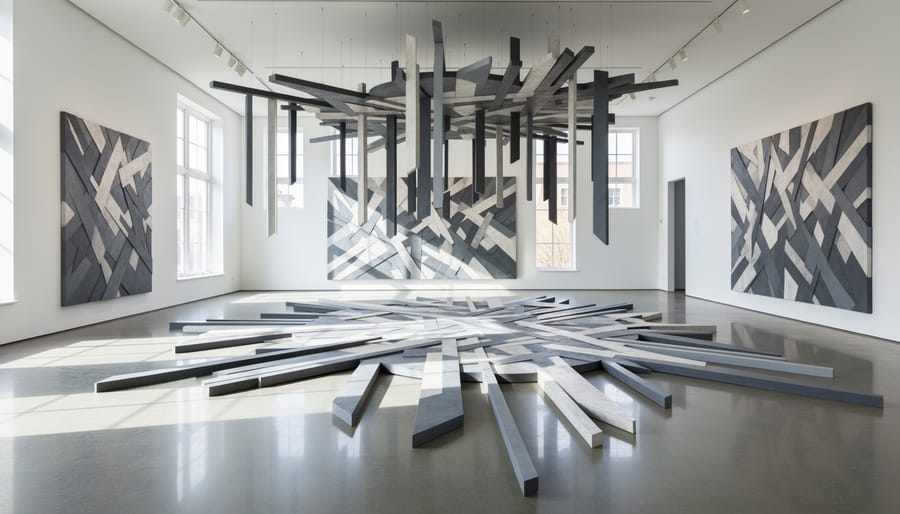
Installation art goes a step further. Instead of a single object on a pedestal, the artist shapes a whole room or outdoor setting, and you step inside the work. Some installations are huge, and some are quiet and personal.
Then there’s art that moves or glows. Kinetic pieces respond to wind, motors, or your own footsteps. Light-based work uses LEDs, neon, or projection to turn space itself into material.
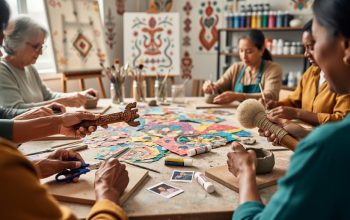
Craft-rooted practices belong in the picture, too. Ceramics, textiles, beadwork, and fibre art are often fully sculptural, built by hand with techniques passed between generations and brought here by communities from around the world. The old line between “craft” and “fine art” has softened a great deal, and contemporary galleries now treat these forms as serious sculpture.
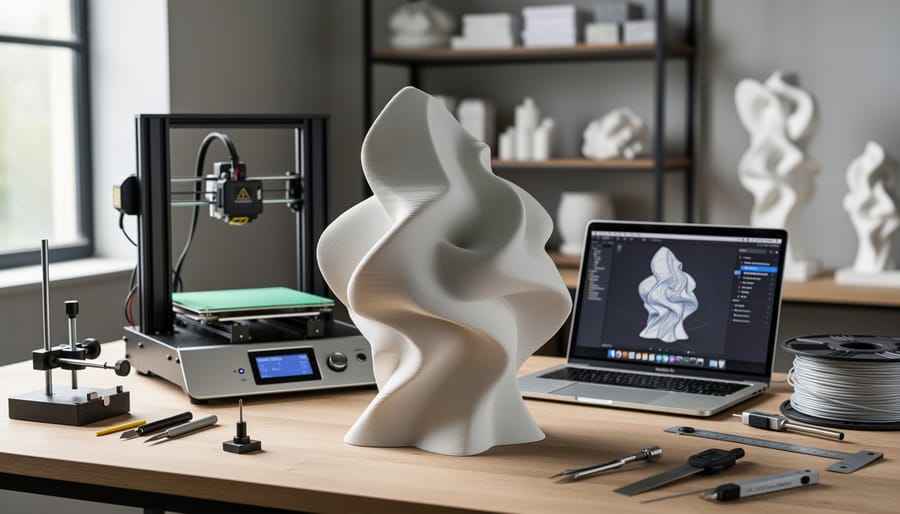
Technology has opened another door. Artists use 3D scanning, printing, and digital fabrication to make forms that would be nearly impossible to carve or cast by hand, sometimes blending them with traditional materials.
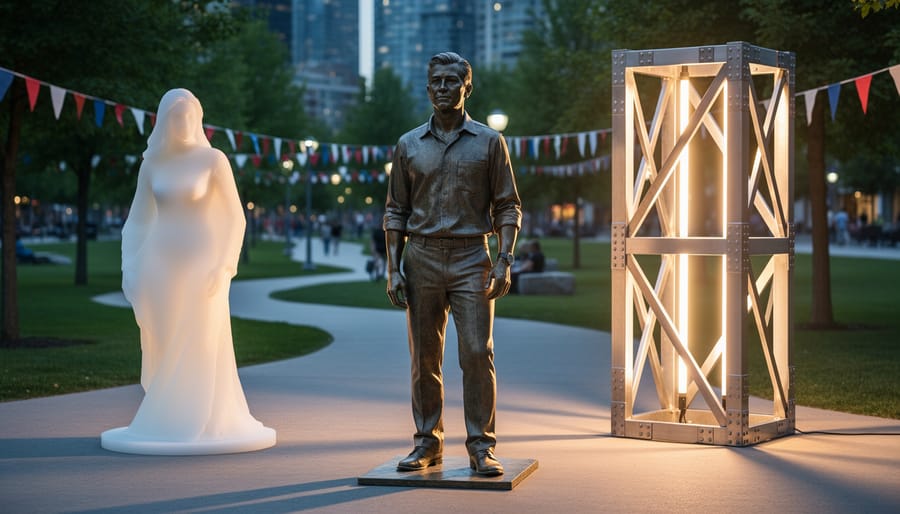
Finally, there are public monuments and commissions: memorials, murals-turned-sculptures, and landmark pieces in plazas and transit hubs. These are often the first contemporary 3D works people meet, simply because they live outdoors where everyone can see them.
You don’t need training to appreciate any of this. Start by noticing how a work changes as you walk around it, and what it’s made from.
How Three-Dimensional Art Grew Alongside a Changing Canada
Roots in Indigenous and Settler Traditions
Long before Canada had a word for “contemporary sculpture,” Indigenous peoples across these lands were making three-dimensional work of extraordinary skill. Coast Salish and Haida carvers shaped cedar into poles, masks, and canoes that carried family histories and law. Inuit artists have long worked soapstone, bone, and antler, giving form to animals, spirits, and everyday northern life. Métis makers brought their own visual language, from beadwork to the ingenious Red River cart, a built object as much as a tool.
These traditions aren’t a prelude to “real” art. They are living practices that continue to shape the field today. Many Indigenous artists now move between ancestral techniques and new materials, setting cedar beside steel, or weaving beside glass and light. Some use sculpture and installation to speak directly to treaty promises, land, and memory, challenging the old habit of treating Indigenous work as craft or artifact rather than contemporary art.
Settler traditions added their own layers: European academic carving, then modernist abstraction in stone and metal. What makes the Canadian scene distinctive is the conversation between these lineages. When a monumental public work draws on both, it asks viewers to see how many stories this place holds.
Multicultural Influences on Form and Material
When people from around the world settled in Canada, they carried more than suitcases. They brought ways of shaping clay, carving wood, weaving fibre, and casting metal that had been refined over generations. Those methods didn’t stay in the old country. They met new materials, new climates, and new neighbours, and the sculpture that came out of those meetings is part of what gives Canadian three-dimensional art its range.
The country’s multicultural identity didn’t appear overnight. It was built by successive waves of newcomers, shaped in part by immigration policies that opened doors to artists, craftspeople, and communities from every continent. Studios and community centres in cities like Toronto, Vancouver, and Montreal became places where a South Asian metalworking tradition, a Caribbean assemblage practice, or an East Asian ceramic technique could sit beside a prairie farm-town welder or a Quebec woodcarver, each learning something from the other.
You can see the exchange in the materials themselves. Ceramic traditions travelled across the Pacific and the Atlantic and found new life in contemporary installation, where hand-built vessels become repeated, room-filling forms. Textile arts, from embroidery to batik to quilting, now appear as soft sculpture and suspended structures. Found objects carry stories too: a suitcase, a spice tin, or a piece of fabric from a grandmother’s home can become the core of a work about leaving, arriving, and building again.
Symbols travel as well. Many artists with immigrant or diasporic backgrounds work with motifs like thresholds, doorways, boats, and homes, because these capture the in-between experience of belonging to two places. A sculpture of a house made from translucent paper, or a ship assembled from household objects, speaks plainly to anyone who has ever started over somewhere unfamiliar, whatever their own history.
The exchange runs in every direction. Artists often describe learning from neighbours, teachers, and collaborators outside their own heritage, and these relationships push the work somewhere new. A technique brought from one part of the world meets a Canadian material like cedar, birch bark, or locally dug clay, and the result belongs fully to neither tradition. It belongs to the conversation between them.
That conversation is what makes the scene feel alive. When you stand in front of a contemporary sculpture in Canada, you’re often looking at layers of memory, adaptation, and invention, shaped by many hands from many places.
Canadian 3D Artists and Practices Worth Knowing
Sculptors and Installation Makers Rooted in Community
Some of the most memorable three-dimensional work in Canada begins not in a studio trend but in a story handed down through a community. These artists tend to be recognized for exhibitions in public institutions, long careers, and work that reflects the place and people it comes from.
Rebecca Belmore, an Anishinaabe artist, is widely known for sculpture, installation, and performance that speak to land, memory, and belonging. Her large-scale pieces often ask viewers to consider who is present in a landscape and whose histories have been overlooked. Brian Jungen, of Dane-zaa descent, reshapes everyday consumer goods into forms that echo Northwest Coast imagery, such as whale skeletons and masks, inviting a conversation about material, identity, and commerce.
Diasporic experience shapes other practices. Shary Boyle, who works with porcelain, projection, and sculptural installation, draws on folklore and personal narrative in ways that feel both intimate and mythic. Kapwani Kiwanga, a Canadian artist of Tanzanian heritage, builds installations that use fibre, colour, and architectural forms to prompt reflection on history and shared memory.
Regional voices matter just as much. Inuit sculptors, many working in stone, bone, and antler in communities across the North, carry forward traditions of carving that connect directly to land, animals, and family life. Cape Dorset, now Kinngait, has long been associated with this work, and carvers there have shaped how many Canadians first encountered Indigenous sculpture.
Seeing any of these artists in person, whether in a gallery or outdoors, reveals how deeply place and community shape three-dimensional form.
Digital Fabrication and New-Media Pioneers
Canada has long been a quiet powerhouse in electronic and immersive art, and a handful of artists carry sculptural thinking into screens, scanners, and light.
Rafael Lozano-Hemmer, who was born in Mexico City and is now based in Montreal, builds large interactive installations that blend robotics, projection, and sensors. His public work often turns passersby into participants, with light beams, shadows, or voices shifting as people move through a space. Sculpture, here, becomes something you help shape just by being present.
Janet Cardiff and George Bures Miller, the Canadian duo who work together, create immersive environments where sound and physical objects share the room. Their pieces feel like walking into a stage set that keeps rearranging itself around you. Cardiff’s audio walks add yet another layer, asking you to move through real places while a recorded voice blends with your surroundings.
Michael Snow, whose long career moved fluidly between film, photography, music, and sculpture, helped establish how Canadian artists think about perception and form. His public sculptures, including the figures that overlook Toronto’s Rogers Centre, show a playful curiosity about how an artwork changes depending on where you stand.
Younger makers continue this lineage with 3D scanning, printing, and augmented reality, turning heritage objects, bodies, and neighbourhood landmarks into new forms. For many, the technology is less the point than a way to reimagine memory and place.
Together, these artists show that “3D” in Canada isn’t limited to marble or bronze; it can also be projected, printed, or experienced by stepping inside.
Where Communities Meet 3D Art: Festivals, Public Spaces, and Galleries
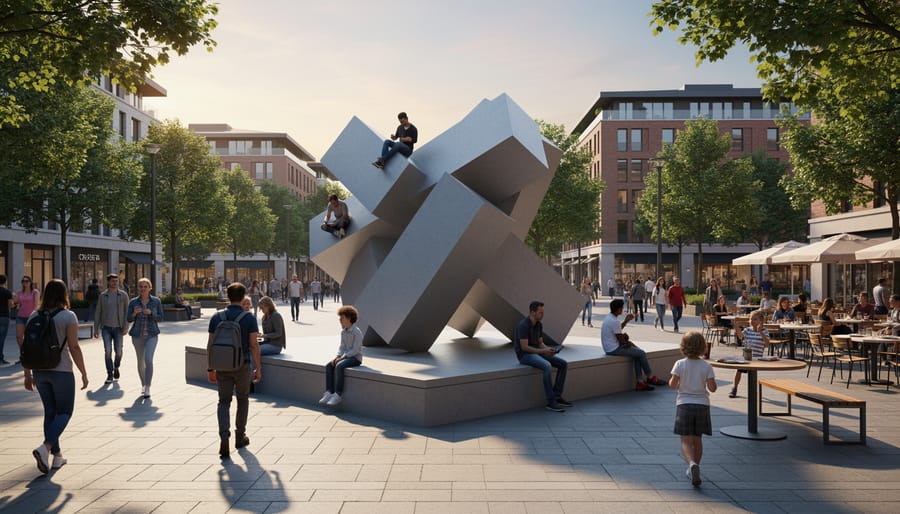
Canadian communities tend to meet 3D art in the middle of everyday life, not behind gallery walls. Arts festivals regularly commission large-scale installations that people can walk through, touch, and talk about with neighbours. Overnight events in the spirit of Nuit Blanche turn downtowns into open-air galleries, where light-based sculpture, projection, and interactive pieces draw crowds of all ages well past midnight. Many first-time viewers find these evenings the friendliest way into contemporary work, since there’s no ticket to buy and no expectation to “get it.”
Outdoor sculpture parks and civic plazas offer a slower pace. A bronze figure beside a river path, a carved pole standing near a community centre, a steel form catching prairie light: each invites you to circle it, sit with it, and read the story it carries. Neighbourhood celebrations, from cultural heritage days to street festivals, often bring in temporary installations too, built by local makers who draw on the symbols, textiles, and craft traditions of their own communities. A lantern display or woven archway can say as much about a place as any permanent monument.
Galleries and university spaces still play a role, especially for work that needs controlled light, sound, or digital equipment. Many also run workshops and school tours that connect with art education giving students hands-on time with the materials artists use.
To find current programming, start local. City cultural offices, public art registries, and arts council calendars list temporary and permanent works. Festival websites usually post programs a few months ahead, and community centres and libraries often share neighbourhood event listings. Follow a few regional galleries and artist-run centres on social media, and you’ll hear about openings long before they arrive.
Questions Readers Often Ask About Canadian 3D Art
Most people new to three-dimensional art worry they need training to “get it.” You don’t. Curiosity and a willingness to walk around a piece are enough, and the questions below are the ones that come up most often.
How do I start appreciating 3D contemporary art?
Slow down and move around the work. Notice the material, the scale, and how your own body relates to it, then read the label for the story behind it.
How can I support local 3D artists?
Visit small galleries and open studios, share artists’ work, and buy directly when you can. Showing up at community events and artist talks also matters more than most people realize.
How can educators bring sculpture into the classroom?
Start with hands-on making, such as clay, found-object assemblage, or cardboard construction, then connect it to the cultural stories behind different forms. Outdoor public sculptures near your school make an easy, free field trip.
Do digital and traditional practices really coexist?
Very comfortably. Many artists sketch in clay or wood, scan or print their forms, then finish by hand, so the tools feed one another rather than compete.
Seeing the work in person is usually the best teacher. Overnight events and outdoor installations are especially welcoming because they cost little and invite casual wandering. Something like the Toronto light festival shows how light-based and sculptural pieces can turn an ordinary street into a shared gathering space. Bring a friend, talk about what you see, and let your first reactions count. There are no wrong answers when you’re simply looking, and the more neighbourhoods you explore, the more of Canada’s many voices you’ll meet in three dimensions.
Walk through almost any Canadian city and you’ll bump into the story of this country told in bronze, steel, cedar, light, and code. Three-dimensional artists carry that story forward, whether they’re carving on a coastline, welding in a prairie studio, or scanning and printing forms that didn’t exist a generation ago. Their work shows how Contemporary Canadian Art Development keeps widening, making room for Indigenous knowledge, newcomer memories, and regional pride all at once.
What makes this field so welcoming is that you don’t need a gallery pass or an art history degree to meet it. A sculpture in a park, a glowing installation at an overnight arts event, or a mural-scale piece beside a transit stop can spark curiosity just as easily as any museum show. Each one invites you to circle it, touch the idea of it, and ask who made it and why.
So take a slow walk through your own neighbourhood, check your community’s arts calendar, and let a sculpture surprise you. Chances are, the next chapter of Canadian art is standing just around the corner.