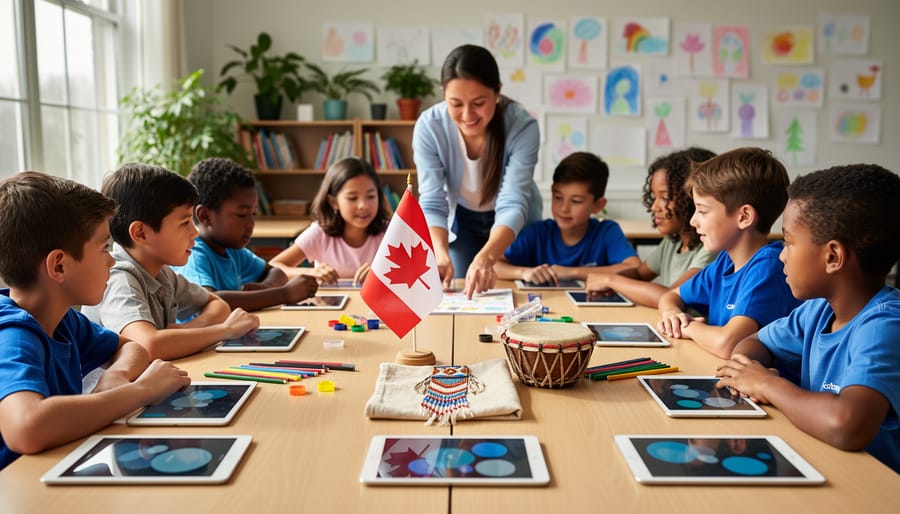
Understand how education funding flows through Canada’s unique federal-provincial partnership, where provinces and territories control 93% of education spending while the federal government supports Indigenous education, official language programs, and research initiatives. This decentralized model reflects Canada’s multicultural identity, allowing each region to tailor educational investments to local linguistic, cultural, and economic needs.
Track the money from its sources to classroom impact by examining three funding streams: provincial budgets drawn from income and sales taxes, federal transfers for specific programs, and local property taxes that create disparities between wealthy and modest communities. In 2023, Canada invested over $75 billion in elementary and secondary education, with per-student spending varying dramatically from $12,000 to $28,000 depending on location and Indigenous status.
Recognize that funding decisions shape which languages flourish in schools, how newcomer children access settlement support, and whether arts and cultural programs survive budget pressures. School boards in multicultural urban centers allocate significant resources to English and French as Second Language programs, heritage language instruction, and culturally responsive curriculum development that honors the traditions students carry from over 200 countries of origin.
Investigate your local school board’s budget documents, which public institutions must publish annually, to discover how tax dollars support everything from Diwali celebrations to Indigenous knowledge keeper programs. These transparent records reveal whether funding priorities align with community values around equity, inclusion, and cultural celebration.
This exploration of education funding illuminates how financial choices either bridge or widen opportunity gaps, particularly affecting racialized students, Indigenous learners, and newcomer families navigating an unfamiliar system while contributing their rich cultural perspectives to Canadian classrooms.
The Foundation: Understanding Canada’s Education Funding Model
Federal Contributions: Beyond Direct Funding
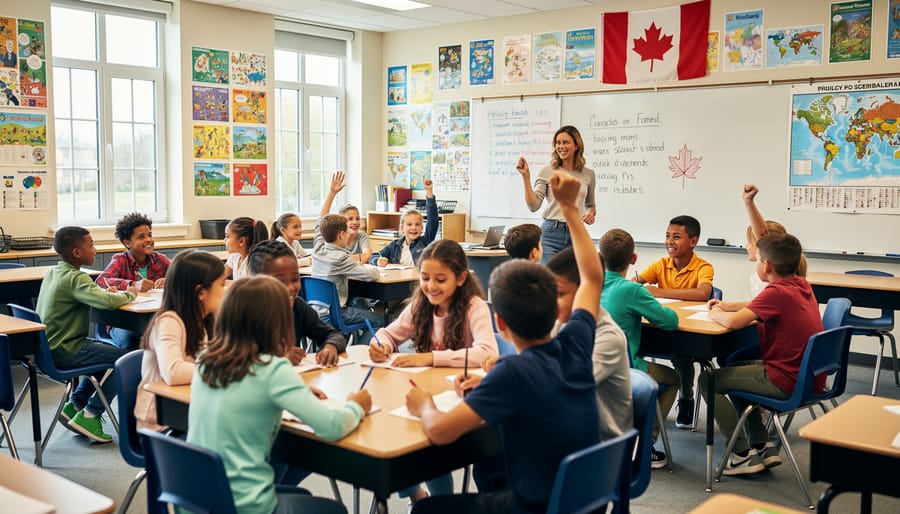
While provinces hold primary responsibility for education, the federal government weaves its support throughout Canada’s educational tapestry in meaningful, though less visible, ways. Think of it as a supporting actor whose contributions enrich the entire production.
Transfer payments form the financial backbone of this relationship. Through mechanisms like the Canada Health and Social Transfer, federal dollars flow to provinces, providing flexible funding that helps sustain educational infrastructure alongside health and social programs. These transfers acknowledge that while education remains provincial jurisdiction, national prosperity depends on strong learning systems from coast to coast to coast.
Indigenous education represents a direct federal commitment, rooted in treaty obligations and the pursuit of reconciliation. Ottawa funds on-reserve schools, post-secondary assistance for First Nations and Inuit students, and programs preserving Indigenous languages and knowledge systems. This investment honours the principle that education should reflect and celebrate the diverse ways of knowing that have shaped this land for millennia.
Official languages programming ensures both French and English thrive in classrooms nationwide. Federal support for French immersion, minority language education, and second language learning helps maintain Canada’s linguistic duality as a living reality rather than merely constitutional text.
Special initiatives further demonstrate federal reach: newcomer settlement programs that ease transitions for immigrant students, multiculturalism grants supporting culturally responsive teaching, and targeted funding for students with disabilities. These programs recognize that inclusive education requires intentional investment in meeting diverse needs, creating classrooms where every student’s story matters.
Provincial Powers: Where the Real Decisions Happen
In Canada’s education landscape, the real power resides not in Ottawa but in provincial and territorial capitals, where decisions about spending, curriculum, and classroom resources take shape. This decentralized model creates a rich tapestry of approaches across the country, each reflecting regional priorities and cultural values.
Consider British Columbia, where recent budgets have emphasized Indigenous language revitalization programs, funding immersive learning experiences that honour First Nations, Métis, and Inuit traditions. Schools in communities like Haida Gwaii now offer classes taught entirely in Haida, preserving linguistic heritage while meeting curriculum standards. Meanwhile, Quebec’s education system operates distinctly, with substantial funding directed toward French-language education and protecting francophone culture, ensuring students from Montreal to Gaspésie maintain their linguistic identity.
Ontario takes a different path, allocating significant resources toward multicultural education initiatives that reflect the province’s diverse urban centres. Toronto schools receive funding for heritage language programs spanning Mandarin to Somali, celebrating the mosaic of communities that call the province home. In the Prairie provinces, Saskatchewan and Manitoba have invested heavily in newcomer support programs, recognizing their growing immigrant populations and the need for settlement services integrated within schools.
The Atlantic provinces, facing different demographic challenges, often pool resources for specialized programs. Nova Scotia’s targeted funding for rural schools ensures students in fishing communities receive comparable opportunities to their Halifax counterparts. These regional variations demonstrate how provincial control allows education funding to respond to local needs, creating systems that honour Canada’s commitment to inclusivity while addressing distinct community priorities.
The Money Trail: Where Education Dollars Actually Go
Supporting Diverse Learners: Funding for Inclusion
Canada’s commitment to inclusion shines through targeted funding programs that recognize the rich tapestry of learners within our classrooms. These investments ensure that every child, regardless of their background or abilities, has the opportunity to thrive.
English as a Second Language programs receive substantial provincial funding to support newcomer students as they navigate their educational journey. In Toronto’s Thorncliffe Park neighbourhood, where over 80 languages are spoken among students, ESL funding has enabled schools to hire multilingual settlement workers and develop bridging programs that honour students’ home languages while building English proficiency. One teacher describes watching a Syrian refugee student bloom from silence to confidence, supported by culturally responsive curriculum materials purchased through these grants.
Indigenous education funding takes multiple forms across Canada. The federal government allocates approximately $2 billion annually for First Nations K-12 education, while provinces fund Indigenous-focused programs in public schools. In Saskatchewan, this has translated into Cree language immersion programs and land-based learning initiatives where Elders teach traditional knowledge alongside standard curriculum. These investments acknowledge the educational sovereignty of Indigenous communities while working toward reconciliation.
Special education funding addresses the needs of students with physical, cognitive, or behavioural exceptionalities. British Columbia’s model provides base funding plus additional resources based on individual student needs assessments. This flexible approach has enabled schools to create sensory rooms, hire educational assistants, and implement assistive technologies.
Multicultural curriculum resources receive dedicated funding in several provinces, ensuring textbooks and learning materials reflect Canada’s diversity. When students see themselves in classroom materials, whether celebrating Diwali in social studies or reading stories featuring Black Canadian heroes, education becomes genuinely inclusive. These programs demonstrate that diversity isn’t just accommodated—it’s celebrated as fundamental to Canadian education.

The Multicultural Classroom: How Funding Shapes Cultural Learning
When eight-year-old Amira arrived in her Calgary classroom wearing a vibrant shalwar kameez for International Day, she beamed with pride as her teacher invited her to share stories about her Pakistani heritage. This moment, replicated in countless variations across Canadian schools, represents more than cultural celebration—it reflects strategic government investments that weave diversity into the fabric of education itself.
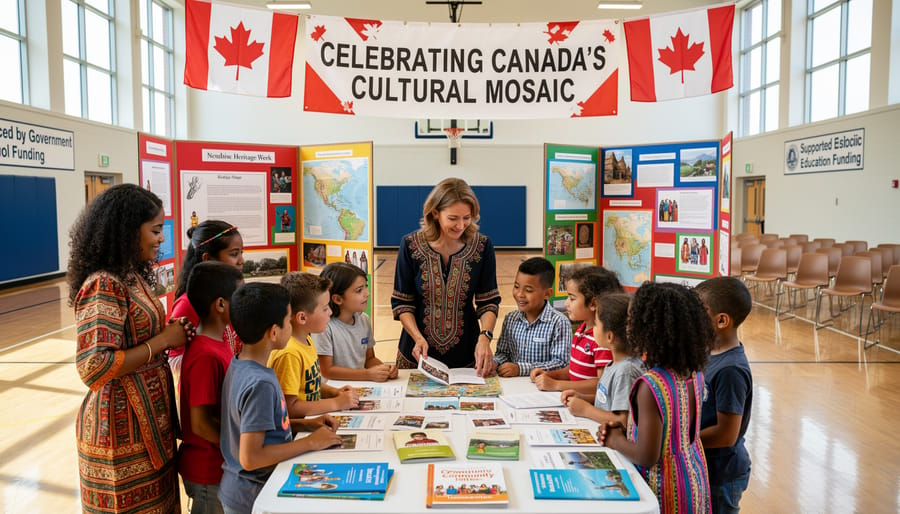
Government funding plays a pivotal role in sustaining programs that honor and amplify Canada’s cultural mosaic within educational settings. Heritage language programs, receiving millions in provincial and federal support, enable students to maintain connections with their ancestral languages while mastering Canada’s official languages. In Toronto, children learn Mandarin, Punjabi, and Portuguese alongside English. In Vancouver, elementary schools offer Indigenous language immersion programs, preserving linguistic traditions that predate Confederation.
Beyond language instruction, funding streams support tangible cultural learning experiences. Schools across provinces organize cultural festivals, powwows, and heritage celebrations that transform abstract concepts of diversity into lived experiences. These events require resources—from traditional instruments and authentic cultural artifacts to guest speakers and community partnerships—all made possible through dedicated education budgets.
Provincial governments have established various initiatives to strengthen multicultural education:
- Ontario’s Anti-Racism and Equity Strategy provides targeted funding for curriculum development and diverse learning materials
- British Columbia’s Indigenous Education Enhancement Agreements support culturally responsive teaching in over 60 school districts
- Quebec’s Welcoming and Integration of Immigrant Students program funds specialized support services and cultural bridging activities
- Alberta’s Diversity and Inclusion funding stream supports professional development for educators working with diverse student populations
These programs extend into professional development, where government investments equip educators with cultural competency training. Teachers learn to recognize unconscious bias, adapt curricula for diverse learners, and create inclusive environments where every student sees themselves reflected in their learning materials.
The impact resonates beyond classroom walls. When students encounter textbooks featuring diverse Canadian heroes, library shelves stocked with multicultural literature, and art supplies for exploring global traditions, they internalize an essential Canadian value: diversity strengthens rather than divides. Government funding transforms this principle from political rhetoric into educational reality, ensuring that Canada’s next generation grows up celebrating the differences that define their nation.
The Funding Gap: Challenges Facing Canadian Education
Despite Canada’s commitment to universal education, significant funding disparities create uneven learning landscapes across the country. These gaps don’t just affect budgets—they shape the daily experiences of students, teachers, and families who navigate a system that can feel worlds apart depending on where you live or who you are.
The rural-urban divide represents one of the most persistent challenges. A student in downtown Toronto might attend a school with specialized STEM labs and extensive arts programming, while their counterpart in rural Saskatchewan sits in a classroom where the teacher doubles as the guidance counselor and maintenance supervisor. Rural schools often face higher operational costs—heating buildings through harsh winters, transporting students across vast distances, and offering competitive salaries to attract educators. Yet provincial funding formulas don’t always account for these geographic realities, leaving small communities to stretch limited resources ever thinner.
For Indigenous students, the funding gap cuts even deeper. First Nations schools on reserves receive federal funding that has historically lagged behind provincial rates by anywhere from twenty to thirty percent per student. This disparity translates into crumbling infrastructure, outdated textbooks, and limited access to culturally relevant programming that honours Indigenous languages and traditions. Consider a Cree student in northern Manitoba who attends a school without a proper library, while just kilometers away in the provincially-funded system, students enjoy modern learning spaces and technology. These inequities compound historical injustices and perpetuate cycles of educational disadvantage.
Lower-income neighborhoods in cities face their own struggles. Schools in these communities often serve higher proportions of students who need additional support—newcomer families learning English or French, children facing housing instability, or students requiring mental health services. While these schools need more resources, property tax-based funding models in some provinces mean they often receive less. A school in Vancouver’s affluent neighborhoods might benefit from robust parent fundraising, while another in a working-class area struggles to afford basic supplies.
Students from diverse backgrounds particularly feel these pressures. A recent Syrian refugee family settling in Halifax needs ESL support, cultural integration assistance, and trauma-informed care. A student with special needs in Winnipeg requires specialized equipment and one-on-one support. These aren’t luxuries—they’re necessities that allow all students to participate fully in Canadian society. When funding falls short, the promise of inclusive education rings hollow, leaving the most vulnerable students further behind in a system that should lift everyone up.
Success Stories: When Funding Makes a Difference
When government funding reaches the right hands, the transformation can be remarkable. Across Canada, strategic investments in education have created ripples of positive change that extend far beyond classroom walls, enriching communities and opening doors for students from all backgrounds.
In northern Manitoba, the First Nations School Success Program received substantial provincial funding that revolutionized language education. The initiative brought Cree and Ojibwe language specialists into schools, creating culturally responsive curricula that honoured Indigenous knowledge systems while meeting provincial standards. Within three years, student engagement soared by 40 percent, and graduation rates climbed steadily as young learners saw themselves reflected in their education. Elder-led workshops became regular features, bridging generations and preserving vital cultural wisdom.
The impact of targeted funding shines equally bright in urban centres. Toronto’s Arts Equity Initiative, supported through combined federal and provincial grants, brought professional artists from diverse cultural backgrounds into underserved schools. Syrian-Canadian musicians taught traditional instruments alongside contemporary composition. Jamaican-Canadian dancers shared their heritage through movement classes. The program transformed school culture entirely—students who had never held a paintbrush or performed on stage discovered hidden talents and newfound confidence. Several graduates have since pursued careers in creative industries, representing true multicultural success stories.
In rural Saskatchewan, government funding enabled an innovative partnership between agricultural communities and Indigenous educators. The Land-Based Learning Project integrated traditional ecological knowledge with modern environmental science, creating outdoor classrooms where students learned from both textbooks and the land itself. The program addressed educational gaps while fostering environmental stewardship and cross-cultural understanding.
British Columbia’s newcomer support programs demonstrate how strategic funding addresses specific needs. Settlement-focused education grants provided specialized English language instruction alongside cultural orientation programs, helping immigrant families navigate the school system confidently. Translation services, culturally appropriate counselling, and parent engagement initiatives created welcoming environments where diversity became a celebrated strength rather than a challenge to overcome.
These success stories share common threads: they recognize that education transcends standardized testing, they honour diverse ways of knowing, and they understand that investing in students means investing in entire communities. When funding reaches classrooms with vision and cultural sensitivity, every Canadian student benefits from richer, more inclusive learning experiences.
What This Means for Your Community
Understanding how education funding flows through your community begins with a simple truth: these dollars shape the classrooms where children learn about Terry Fox’s determination, explore Haida art, and celebrate Diwali alongside Hanukkah. As parents, educators, and community members, you have more influence over this process than you might realize.
Start by tracking funding in your province through your provincial education ministry’s website, which typically publishes annual budget allocations and school board financial reports. Many provinces now offer user-friendly dashboards where you can see exactly how much funding your local school receives and how those resources are distributed. Saskatchewan residents, for instance, can access detailed breakdowns through the Ministry of Education’s transparency portal, while British Columbia provides searchable databases showing per-student funding across districts.
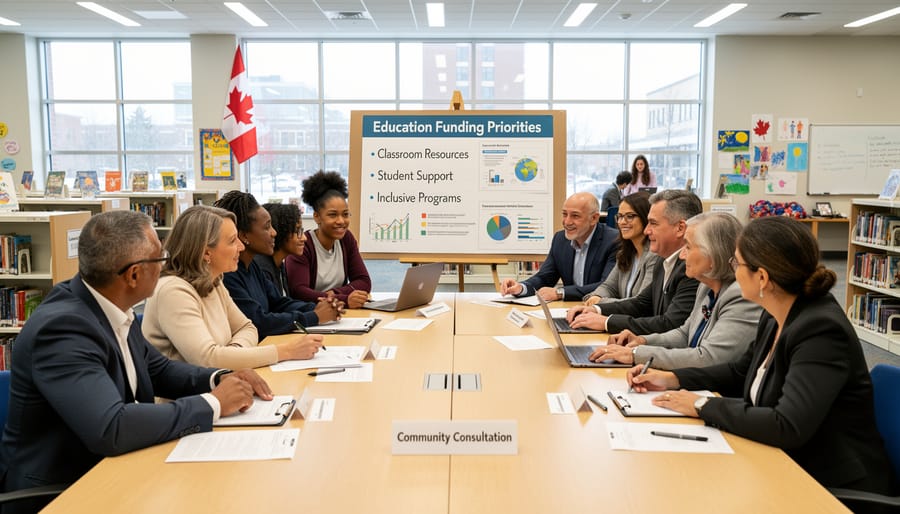
Your school board’s public meetings offer windows into funding decisions that affect everything from French immersion programs to Indigenous language courses. These gatherings, usually held monthly and increasingly available via livestream, welcome community input on budget priorities. Attend one meeting and you’ll discover passionate discussions about preserving multicultural programming even when budgets tighten, or debates about expanding resources for newcomer students learning English or French.
Supporting culturally inclusive education extends beyond advocacy meetings. Parent councils actively fundraise for programs that celebrate diversity, from Black History Month assemblies to Ukrainian dance workshops. Volunteer to share your family’s cultural traditions during heritage weeks, or mentor newcomer families navigating the education system. These grassroots efforts complement formal funding structures, creating rich learning environments where every student sees themselves reflected in the curriculum.
Connect with provincial education advocacy organizations representing diverse communities. Groups like the Ontario Alliance of Black School Educators or the BC Confederation of Parent Advisory Councils amplify voices calling for equitable funding distribution. Your participation strengthens collective efforts ensuring education dollars reach all students, regardless of postal code or cultural background.
Government funding for education stands as one of the most powerful tools we have to preserve and celebrate Canada’s rich multicultural tapestry. When we invest in schools that honor diverse languages, traditions, and perspectives, we’re not simply allocating dollars—we’re building bridges between communities and nurturing the next generation of engaged, culturally aware citizens.
Throughout this exploration of education funding, we’ve seen how federal and provincial governments shape the learning experiences of millions of Canadian students. From supporting Indigenous language programs to enabling multicultural festivals in schools, these investments create spaces where every child can see themselves reflected in the curriculum and where cultural exchange becomes part of everyday learning.
As informed citizens, we each play a vital role in this ongoing story. Whether attending school board meetings, advocating for equitable funding distribution, or supporting community-based educational initiatives, our voices matter in shaping policies that ensure no student is left behind. We can champion programs that celebrate our heritage—from Diwali celebrations to powwows, from lunar new year festivities to harvest festivals—while demanding transparency in how education dollars reach the classroom.
Looking ahead, our increasingly diverse Canada will require even more thoughtful, inclusive approaches to education funding. The future calls for continued dialogue, innovative partnerships, and unwavering commitment to the principle that every student deserves access to culturally rich, well-resourced education that prepares them to thrive in our wonderfully diverse nation.