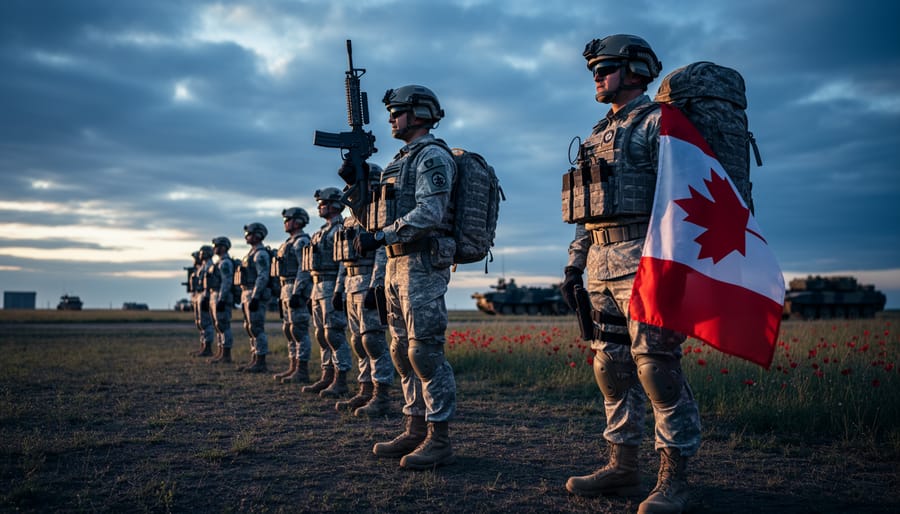
Military achievements are the defining combat victories, strategic operations, and acts of valor that demonstrate a nation’s martial capability and shape its identity. For Canada, these accomplishments span from the pivotal 1813 Battle of Queenston Heights through two World Wars to modern peacekeeping missions, each reflecting the courage and tactical excellence of Canadian forces while forging a national character distinct from both British colonial origins and American influence.
Understanding what qualifies as a military achievement requires looking beyond simple battlefield wins. These moments combine tactical success with lasting strategic impact, whether defending territory, liberating occupied nations, or pioneering new military doctrines. Canada’s story offers particularly compelling examples: at Vimy Ridge in 1917, four Canadian divisions accomplished what British and French forces could not, capturing a fortified escarpment while developing innovative artillery and infantry coordination tactics that influenced warfare for generations. The victory became a foundational moment in Canadian consciousness, demonstrating that a young nation of farmers and laborers could match the world’s established military powers.
The significance extends beyond military history into cultural identity. Canada’s achievements in both World Wars, from the brutal trenches of Passchendaele to the liberation of the Netherlands, created bonds with allies and earned international respect that shaped the country’s role in forming the United Nations and NATO. Today, these accomplishments resonate through remembrance traditions embraced by Canada’s diverse population, connecting Indigenous veterans, immigrant communities, and generations of families to a shared heritage of service and sacrifice that transcends individual cultural backgrounds.
What Defines a Military Achievement
A military achievement represents more than a simple battlefield victory. It encompasses strategic successes that demonstrate tactical brilliance, technological innovation that changes how forces operate, diplomatic breakthroughs that prevent conflict, and humanitarian actions that protect civilian populations. These accomplishments earn recognition when they show exceptional courage, advance military capability, or contribute meaningfully to peace and stability.
Throughout history, what counts as an achievement has evolved alongside changing warfare and international norms. Early military success centred on territorial conquest and decisive battles that altered political boundaries. As conflicts grew more complex, recognition expanded to include logistical mastery, code-breaking operations, and advances in communications or medical care that saved lives without firing a shot. The development of radar, improvements in field surgery, and innovations in supply chain management all represent genuine achievements that shaped outcomes as decisively as any engagement.
Canada’s military identity reflects a particularly broad view of what constitutes achievement. While battles like Vimy Ridge and Juno Beach remain foundational moments, the nation has increasingly defined its military success through peacekeeping excellence, alliance building, and multinational cooperation. A Canadian general who negotiates a ceasefire, a reconnaissance team that gathers intelligence preventing civilian casualties, or engineers who restore infrastructure in conflict zones all contribute achievements that align with national values of diplomacy, diversity, and international responsibility.
This expansive understanding recognizes that military forces serve multiple roles beyond combat. Search and rescue operations, disaster relief deployments, Arctic sovereignty patrols, and training partnerships with allied nations all represent meaningful contributions. When the Canadian Armed Forces assist during natural disasters or participate in humanitarian missions, these actions extend the definition of achievement to include service that protects and supports communities rather than engaging adversaries. The measure of success becomes impact on security, stability, and human welfare, not simply tactical dominance.
Canada’s Defining Military Achievements Through History
World War I: Vimy Ridge and the Birth of National Identity
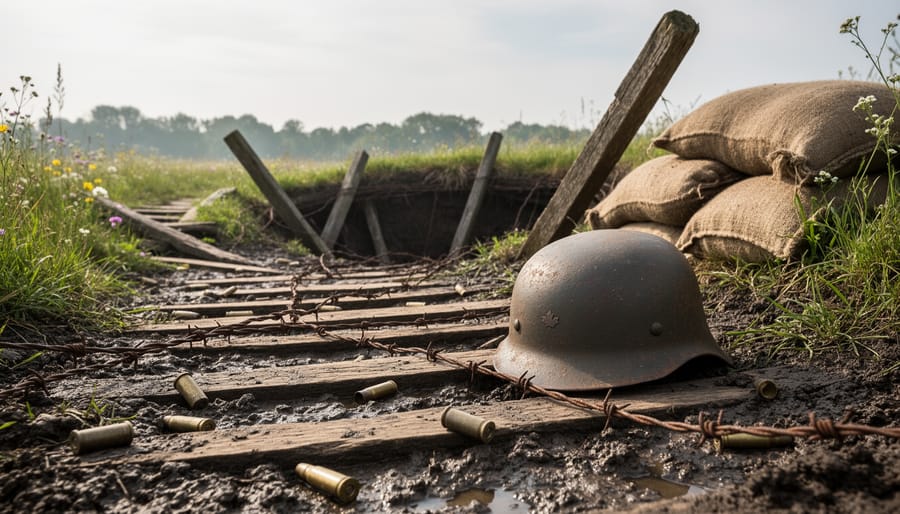
The muddy slopes of Vimy Ridge in northern France became the crucible where Canada truly announced itself as a nation. On April 9, 1917, all four divisions of the Canadian Corps attacked together for the first time, a unified force rather than scattered colonial troops. Where British and French armies had failed for two years, losing 150,000 men in earlier attempts, Canadian forces succeeded in four days, capturing a position the Germans considered impregnable.
The victory wasn’t luck. Canadian commanders implemented meticulous planning that would influence military doctrine for generations. Every soldier received maps and rehearsed on full-scale replicas of German trenches. Artillery officers perfected the creeping barrage, a moving curtain of shells that advanced just ahead of infantry. Engineers dug tunnels to place massive mines under enemy positions. This innovation and preparation cost 3,598 Canadian lives, with another 7,000 wounded, but it demonstrated a professional military capability that couldn’t be dismissed as colonial enthusiasm.
Vimy Ridge gave Canada something unprecedented: international recognition as a fighting force separate from Britain. Prime Minister Robert Borden insisted Canada sign the Treaty of Versailles independently, a diplomatic achievement rooted in battlefield credibility. The separate signature on Versailles marked Canada’s emergence onto the world stage as an autonomous nation.
Beyond Vimy, Canadian troops earned fierce reputations at Passchendaele, where they took the village after three months of Allied failure, and during the Hundred Days Offensive that broke German lines in 1918. These weren’t just battles won, they were the foundations of a national identity forged in shared sacrifice.
World War II: From Juno Beach to Liberation
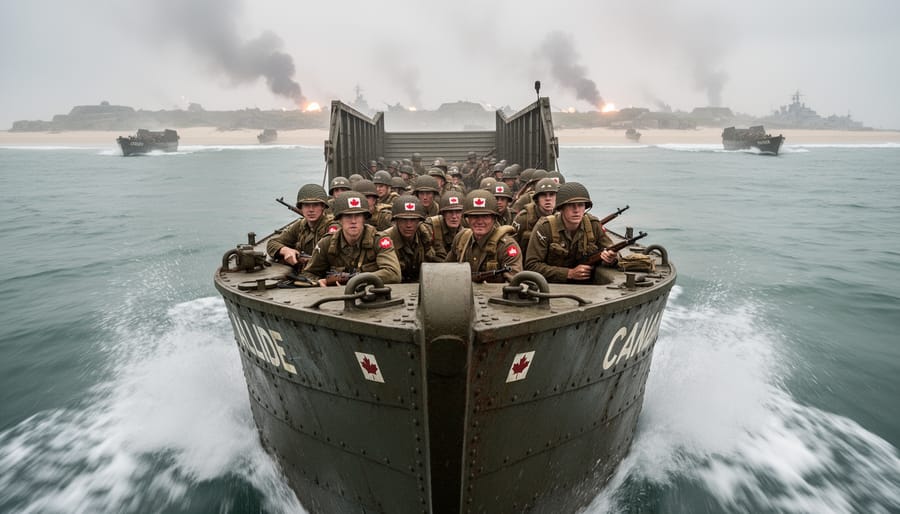
Canada’s Second World War achievements proved decisive on multiple fronts, with over a million Canadians serving across Europe, the Atlantic, and the Pacific. On June 6, 1944, the 3rd Canadian Infantry Division stormed Juno Beach as part of the D-Day invasion, pushing farther inland than any other Allied force that first day despite fierce German resistance. This success at Juno set the stage for Canada’s critical role in liberating Western Europe.
The Battle of the Atlantic showcased the Royal Canadian Navy’s transformation from a modest coastal force to the third-largest Allied navy by war’s end. Canadian corvettes and destroyers escorted over 25,000 merchant ships, protecting vital supply lines despite U-boat threats. This maritime achievement drew heavily on fishing communities from Newfoundland to British Columbia, many bringing generations of nautical expertise.
The liberation of the Netherlands stands among Canada’s most cherished accomplishments. From October 1944 through May 1945, Canadian forces freed Dutch cities and towns, ending years of Nazi occupation and starvation. The bonds formed during this campaign remain strong today, with Dutch communities sending tulips to Ottawa annually in gratitude.
These victories reflected contributions from Indigenous soldiers, Japanese-Canadian volunteers who served despite internment of their families, and recent immigrants who enlisted to defend their adopted homeland, demonstrating how Canada’s diversity strengthened its military effectiveness.
Peacekeeping Pioneers: Canada’s Blue Beret Legacy
In 1956, when British and French forces invaded Egypt during the Suez Crisis, the world teetered on the brink of a wider conflict. Canada’s External Affairs Minister Lester B. Pearson proposed a revolutionary solution: an impartial United Nations peacekeeping force to separate combatants and monitor ceasefires. This innovation earned him the Nobel Peace Prize 1957 and established Canada as the architect of modern peacekeeping.
Canadian military personnel donned the distinctive blue beret in missions across the globe. In Cyprus from 1964 onward, they maintained buffer zones between Greek and Turkish Cypriot communities for decades. During the Balkans conflicts of the 1990s, Canadian troops served in some of the most volatile environments, protecting civilians and delivering humanitarian aid amid ethnic warfare. These missions weren’t about conquest or victory in traditional terms, they represented achievements in preventing conflict, saving lives, and building bridges between hostile parties.
By the early 2000s, Canada had contributed to nearly every major UN peacekeeping operation, with over 125,000 military personnel serving internationally. The blue beret became synonymous with Canadian identity abroad, reflecting values of mediation, multilateralism, and compassion. Officers and enlisted personnel from diverse backgrounds, Indigenous, immigrant, francophone, anglophone, carried forward this legacy, showing that military achievement could mean standing between enemies rather than defeating them.
Modern Operations and Contemporary Contributions
Canada’s military remains active on the world stage, adapting to threats and challenges that would have been unimaginable to the soldiers at Vimy Ridge. The Afghanistan mission, which spanned from 2001 to 2014, stands as the longest combat operation in Canadian history and tested the Armed Forces in counterinsurgency, reconstruction, and training roles. Canadian troops in Kandahar province fought alongside NATO allies while also building schools and infrastructure, demonstrating that modern military success requires more than battlefield prowess.
Contemporary Canadian military achievements reflect the complex security landscape of the 21st century:
- Afghanistan: training Afghan security forces, securing key infrastructure, and conducting combat operations in Kandahar province
- Arctic sovereignty: regular patrols and exercises asserting Canadian presence in the Northwest Passage and northern territories
- NATO commitments: leading battle groups in Latvia and contributing to Eastern European security following Russia’s aggression
- Counter-terrorism: supporting coalition efforts against extremist groups and providing intelligence capabilities
- Humanitarian assistance: deploying rapidly to natural disasters both domestically and internationally
The Canadian Armed Forces have embraced new technologies and approaches, from cyber defence capabilities to unmanned systems. Arctic operations take on special significance as climate change opens northern waterways, requiring the military to assert sovereignty while working with Indigenous communities who have inhabited these lands for millennia. NATO leadership roles, particularly in Latvia, showcase how a mid-sized power can punch above its weight through professionalism and commitment rather than sheer numbers.
The People Behind the Achievements
Behind every military achievement stands a person whose courage, innovation, or leadership made the difference. Canada’s military history reveals a rich tapestry of individuals from every corner of the country and every cultural background, each contributing unique skills and perspectives that shaped the nation’s armed forces.
Victoria Cross recipients exemplify the highest standard of valour. Lieutenant Robert Hampton Gray, a pilot from Nelson, British Columbia, earned Canada’s last VC of the Second World War during a strike against Japanese warships, pressing his attack even after his aircraft was hit. Sergeant Tommy Prince, an Anishinaabe soldier from Manitoba, became one of Canada’s most decorated Indigenous veterans. His exceptional scouting abilities and fluency in multiple languages made him invaluable during reconnaissance missions in Italy and France. Prince’s service challenged prevailing stereotypes and paved the way for greater Indigenous participation in the military.
The contributions of immigrant communities transformed Canada’s military capabilities. Chinese-Canadian soldiers like Sergeant George Chow fought for a country that had denied them basic citizenship rights, yet their service in both world wars helped dismantle discriminatory legislation. Black Canadians faced similar barriers but served with distinction, members of the No. 2 Construction Battalion in WWI and fighter pilots like Flight Lieutenant William Carter who flew with Bomber Command demonstrated skill and resilience under extraordinary pressure.
Women revolutionized military roles beyond nursing. Captain Nichola Goddard became the first Canadian woman killed in combat during Afghanistan operations in 2006, serving as a forward observation officer directing artillery fire. Her leadership reflected how far the Canadian Forces had evolved in recognizing capability over gender.
Innovators like Dr. Frederick Banting, who discovered insulin but also researched aviation medicine, and General Andrew McNaughton, whose work on artillery targeting systems improved accuracy, showed that military achievements extend beyond the battlefield. These individuals came from small towns and major cities, spoke dozens of languages, and practiced various faiths. Their collective service created a military institution that mirrors Canada’s multicultural identity, proof that excellence knows no ethnic or cultural boundaries.
How Military Achievements Influenced Canadian Society and Culture
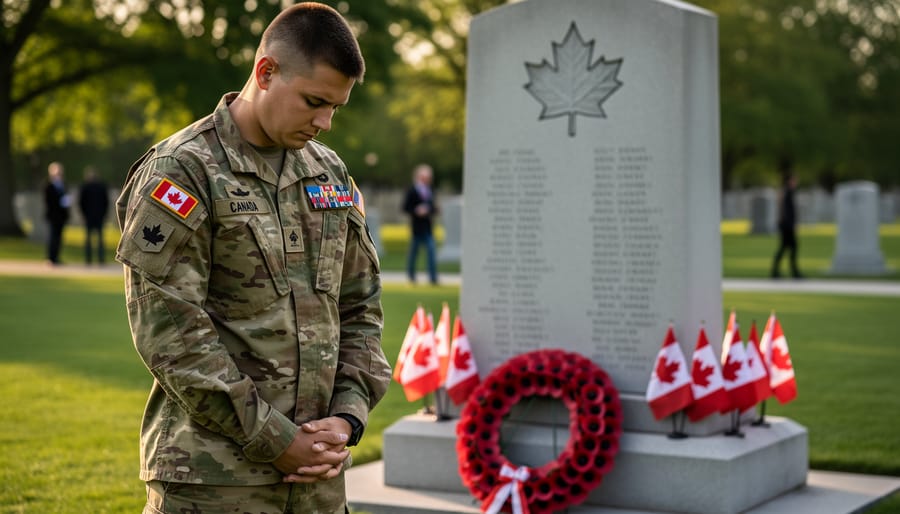
Canada’s military achievements have woven themselves into the nation’s cultural fabric in ways both visible and subtle. Every November 11th, Remembrance Day ceremonies across the country pause to honour those who served, while poppies appear on millions of lapels, a tradition born from John McCrae’s “In Flanders Fields,” written during WWI. These annual commemorations connect Canadians to their military heritage, transforming historic achievements into living memory passed between generations.
The cultural impact extends far beyond annual ceremonies. Canadian literature has grappled with wartime experiences through works like Timothy Findley’s “The Wars” and Joseph Boyden’s “Three Day Road,” which explores Indigenous soldiers’ contributions through a First Nations lens. Films such as “Passchendaele” and documentaries about Juno Beach bring battlefield realities to contemporary audiences, while the National War Memorial in Ottawa stands as a focal point for collective grief and pride. These artistic expressions ensure military achievements remain part of ongoing conversations about who Canadians are and what they value.
Regimental museums scattered across the country preserve artifacts, letters, and personal stories that illustrate themes of courage and sacrifice. The Canadian War Museum in Ottawa welcomes hundreds of thousands of visitors annually, offering educational programs that connect young Canadians to their military past. School curricula incorporate studies of Vimy Ridge and peacekeeping missions, framing these achievements within Canada’s evolving multicultural identity.
Perhaps most significantly, military achievements have shaped Canada’s national self-image as a country that values peace, diversity, and international cooperation. The legacy of soldiers from countless cultural backgrounds, Indigenous peoples, European immigrants, Asian-Canadians, reinforces the narrative that Canada’s strength lies in its diversity. This heritage appears in citizenship ceremonies, civic celebrations, and public discourse, reminding Canadians that their military history reflects the multicultural mosaic that defines the nation today.
Recognizing and Preserving Military Achievements
Canada honours military achievements through a carefully developed system of recognition and commemoration that extends far beyond ceremonies. The Canadian Honours System includes distinguished awards such as the Victoria Cross, the Cross of Valour, and campaign-specific medals that acknowledge both heroism and service. These decorations preserve individual stories of sacrifice and bravery, connecting personal achievement to national memory.
Physical spaces play a vital role in heritage preservation. Museums, memorials, and battlefield sites transform abstract history into tangible experiences that resonate across generations. The Canadian War Museum in Ottawa houses extensive collections documenting military achievements from the earliest conflicts to modern operations, while regimental museums across the country preserve unit-specific traditions and accomplishments. These institutions safeguard artifacts, photographs, and personal accounts that might otherwise vanish.
Major heritage sites include:
- Canadian War Museum, Ottawa, national collection spanning four centuries of military history
- Juno Beach Centre, Normandy, commemoration of Canadian D-Day contributions
- Vimy Memorial, France, tribute to WWI sacrifice and achievement
- Canadian Forces Museum of Aerospace Defence, North Bay, aviation and aerospace achievements
- Canadian Museum of Immigration at Pier 21, Halifax, immigrant military service stories
Library and Archives Canada maintains vast digital collections accessible to researchers and educators, offering lesson plans, primary sources, and oral histories. Provincial archives add regional perspectives, highlighting contributions from diverse communities.
Canadians can engage with this heritage through battlefield tours, regimental open houses, and Remembrance Day ceremonies. Many museums offer military museum stories through guided programs connecting visitors to the human experiences behind medals and monuments. Heritage organizations like the Historica Canada and Veterans Affairs Canada provide educational resources that bring achievements into classrooms, ensuring younger generations understand how these accomplishments shaped the nation.
Common Questions About Canadian Military Achievements
What is Canada’s most significant military achievement?
While many would point to Vimy Ridge as the defining moment that forged Canadian national identity, the nation’s establishment of modern peacekeeping operations after the Suez Crisis represents an equally transformative achievement. Both accomplishments fundamentally shaped how Canada sees itself and how the world perceives the nation’s military role.
How many Canadians have received the Victoria Cross?
Ninety-nine Canadians earned the Victoria Cross, the Commonwealth’s highest military honour, from its inception through the end of the Second World War. Since then, Canada established its own Victoria Cross in 1993, though none have been awarded under this Canadian system to date.
What role did Canada play in the Second World War?
Canada contributed over one million service members to the Allied effort, played a decisive role in the D-Day landings at Juno Beach, and helped liberate the Netherlands. The Royal Canadian Navy escorted thousands of Atlantic convoys, while Canadian airmen flew in every major air campaign across Europe.
How does Canada’s military compare internationally?
Though smaller than major powers, Canadian forces earned respect through professionalism, innovation, and specialized capabilities. The nation punches above its weight in Arctic operations, peacekeeping expertise, and coalition partnerships, maintaining a reputation for reliable, skilled contributions to international security.
Canadians often wonder how to explore this heritage firsthand. Visiting military museums across the country offers direct engagement with artifacts, personal stories, and interactive museum exhibits that bring these achievements to life. The Canadian War Museum in Ottawa houses extensive collections documenting the nation’s military journey, while regimental museums from coast to coast preserve regional contributions and community connections to service. Many battlefield sites, particularly in Europe, maintain Canadian memorials and interpretive centres where visitors can walk the ground where history unfolded.
Canada’s military achievements stand as powerful threads woven throughout the nation’s cultural fabric, revealing values that define the country today. From Vimy Ridge to peacekeeping missions across continents, these accomplishments tell a story far richer than battlefield victories alone. They illuminate Canada’s evolution as a diverse, compassionate nation committed to international cooperation and human dignity.
Understanding these achievements offers more than historical knowledge. It connects Canadians to the experiences of Indigenous soldiers, immigrants who served their adopted homeland, and communities from coast to coast who contributed to defining moments. These stories shape how Canada sees itself: as a nation built by many hands, united by shared sacrifice and collective purpose.
The legacy of military achievements lives on in memorials, museums, and annual commemorations that bring communities together. Visiting sites like the Canadian War Museum in Ottawa, exploring regimental archives across provinces, or participating in Remembrance Day ceremonies provides tangible connections to this heritage. Literature, film, and educational programs continue bringing these narratives to life for new generations.
Canada’s military history isn’t separate from its multicultural character; it’s integral to understanding how diversity, peacekeeping values, and international respect became national hallmarks. These achievements remind Canadians that their country earned its place through courage, innovation, and principled action. Exploring this heritage deepens appreciation for the complex, multifaceted identity that makes Canada unique on the world stage.