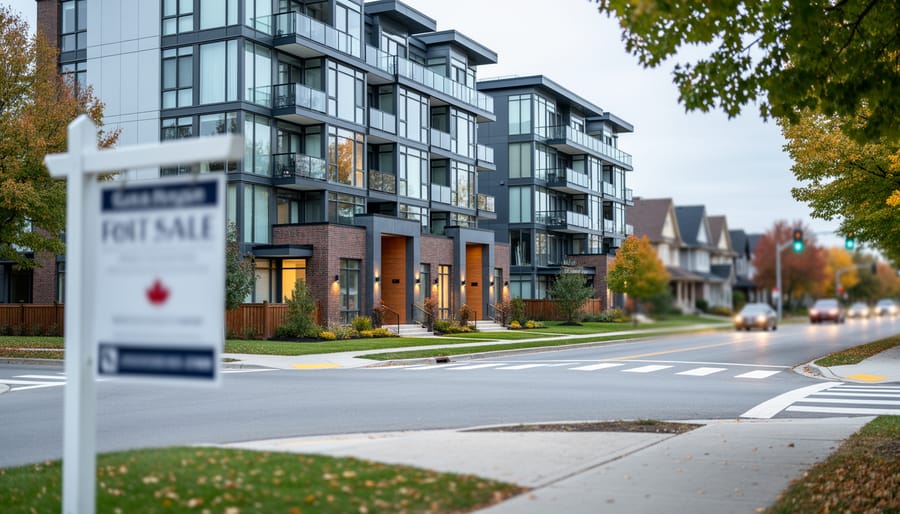
Canada’s housing market has steadied through the summer of 2026, showing cautious growth in sales alongside softening prices and a marked slowdown in new construction. National home sales climbed for the fourth straight month on a seasonally adjusted basis through July, yet benchmark prices continued to ease, sitting at $657,700 in June, down 3.6 per cent from a year earlier. The shift signals a market caught between competing forces: buyers returning after months on the sidelines, developers pulling back on new projects, and rental conditions improving as vacancies rise and rent growth decelerates.
For families navigating homeownership, newcomers planning their next move, and arts workers searching for affordable space, these trends carry real weight. The stabilization offers breathing room after years of volatility, but the contours of recovery remain uneven across regions and housing types. Condominium presale activity has slowed sharply, limiting the pipeline of new units for the next three years, while housing starts are expected to decline further into 2027 and 2028. The rental market, long a pressure point for young professionals and creative communities, is showing signs of relief as supply catches up with demand.
What comes next depends on how these emerging patterns hold through the fall and into 2027. For Canadians across cultures and income brackets, understanding where the market stands today is the first step toward making informed decisions tomorrow.
What Changed: Housing Market Stabilization Takes Hold
After years of sharp swings, soaring prices, bidding wars, then abrupt corrections, Canada’s housing market entered a stabilization phase in 2026. The frenzy that defined the pandemic era has given way to a more measured pace of activity, marked by steady but modest gains in sales and a cooling of price pressures. National home sales climbed for the fourth consecutive month on a seasonally adjusted basis through July, signaling that buyer confidence is cautiously returning. At the same time, the benchmark home price stood at $657,700 in June, down 3.6 per cent from a year earlier, easing some of the affordability burden that had locked out many prospective buyers.
This transition matters profoundly for families navigating housing decisions across the country. In Vancouver’s multicultural neighborhoods, where Punjabi-speaking communities share blocks with Cantonese-speaking seniors and Filipino families, the shift means less panic, more time to weigh options, and greater predictability in planning homeownership or rental moves. In Toronto’s diverse enclaves, from Scarborough to Etobicoke, the calmer market offers immigrant families a chance to establish roots without the pressure of frenzied competition. The stabilization is not a return to boom times; resale activity remains below long-term averages, and challenges persist. But for the first time in years, the market feels less like a runaway train and more like a landscape families can navigate with care.
Key Developments in the Canadian Housing Market

1. Four Consecutive Months of Sales Growth
National home sales climbed for the fourth consecutive month on a seasonally adjusted basis through July 2026, marking the most sustained period of growth the Canadian market has seen in recent memory. This steady uptick signals that buyer confidence is gradually returning after years of sharp swings and uncertainty. Families across the country, from Vancouver’s suburban communities to Montreal’s diverse neighborhoods, are re-entering the market, encouraged by price moderation and a sense that the worst volatility may be behind them.
The recovery is real but measured. While sales are rising, they remain below the long-term averages that defined pre-pandemic market activity. This means the market is finding its footing rather than roaring back. For first-time buyers, including many newcomers and younger families, the sustained growth offers a window of opportunity that didn’t exist during the frenzied peaks of 2021 and 2022. At the same time, sellers are adjusting expectations, recognizing that the market has shifted from a seller’s paradise to something closer to balance.
According to the resale home sales outlook this pattern of recovery is expected to continue, though it will take time before activity reaches historical norms. For communities across Canada, the stabilization represents a step toward housing access that feels less speculative and more sustainable, even as affordability challenges persist.
2. Home Prices Soften Year-Over-Year
Home prices across Canada recorded a modest decline through mid-2026, offering a snapshot of a market in flux. The benchmark home price in June stood at $657,700, down 3.6 per cent from the same month a year earlier. This softening represents a departure from the runaway appreciation that defined the pandemic years, bringing the market closer to equilibrium after a period of extreme highs and investor-driven competition.
For first-time buyers, particularly young families and recent immigrants working to establish permanent roots in Canada, this price moderation opens a window that seemed shut during the bidding wars of 2021 and 2022. A 3.6 per cent decline may sound modest, but it translates to real money saved on down payments and reduced monthly carrying costs. Newcomers to cities like Toronto, Vancouver, and Calgary, many from diverse cultural backgrounds seeking to join established diaspora communities, face less pressure to stretch beyond comfortable budgets or settle for homes far from jobs, schools, and cultural centers.
- First-time buyers gain improved affordability and reduced competition in entry-level segments
- Families upgrading face smaller price gaps between their current home and move-up properties
- Investors encounter lower speculative returns, shifting focus toward rental yield over rapid appreciation
Existing homeowners see the dual reality of price softening: equity growth has paused, yet the cost of upgrading or downsizing has also eased. For middle-class families in suburban communities across the country, the spread between selling a starter home and buying a larger property has narrowed, making family transitions more feasible. This matters deeply in multicultural neighborhoods where multi-generational households and extended families seek space to accommodate everyone under one roof.
3. Housing Starts Begin to Slow
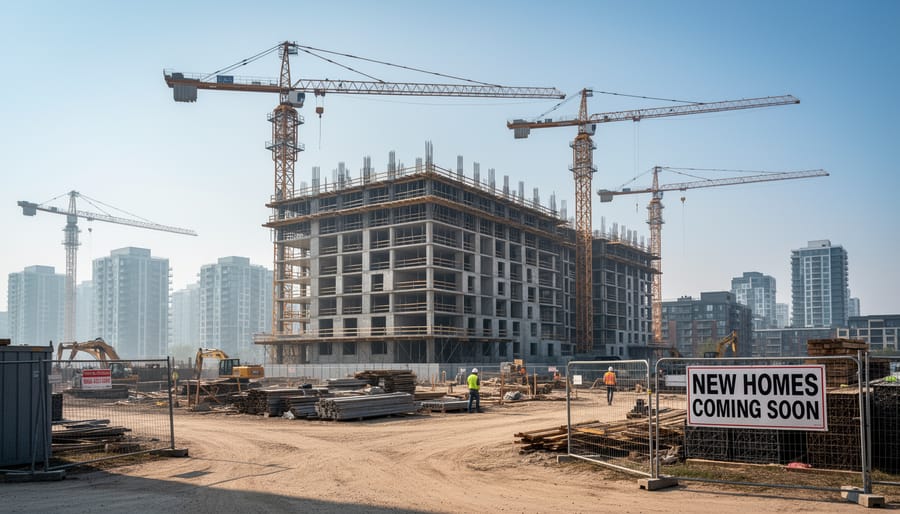
Housing construction across Canada is entering a period of marked deceleration. Housing starts will slow through 2026, with projections pointing to a more substantial drop in 2027 and 2028. This pullback follows years of robust building activity and reflects shifting economic conditions and developer caution.
The slowdown carries particular weight for condominium supply. Lower presale activity, the advance purchases that typically finance new towers, will constrain condominium construction over the next three years. In cities like Toronto, Vancouver, and Montreal, where high-rise condos serve as crucial entry points for first-time buyers and newcomers, this limited pipeline threatens to deepen supply shortages just as demand from diverse, growing communities persists.
Reduced construction activity reverberates through multicultural urban centers where housing diversity matters deeply. Families from immigrant backgrounds, young professionals in the arts sector, and multi-generational households all rely on a range of housing types, from rental apartments to townhomes to affordable ownership units. When new supply contracts, competition intensifies for existing stock, pushing prices and rents higher. The shortage of purpose-built rental housing and accessible ownership options hampers the ability of these communities to establish stable footholds in neighborhoods where cultural institutions, businesses, and social networks thrive.
This construction slowdown sets the stage for tighter housing conditions ahead, even as the broader market stabilizes in 2026.
4. Rental Market Affordability Shows Improvement

Canada’s rental market offers a rare bright spot in the 2026 housing landscape. Affordability is finally improving as high vacancy rates and slower rent growth persist, easing the financial pressure on tenants across the country. This shift matters deeply for newcomers, students, and working families, many from Canada’s diverse immigrant communities, who depend on rental housing to build their lives here.
For years, renters faced relentless increases that squeezed household budgets and forced difficult trade-offs between housing and other essentials. Now, with rental affordability improving across many markets, families have a bit more breathing room. Higher vacancy rates mean landlords are competing for tenants rather than the other way around, and rent growth has slowed to a more sustainable pace.
This development is particularly significant for immigrant families settling into Canadian cities, international students navigating expensive urban centers, and arts and culture workers who often rely on rental housing. When rent consumes a smaller share of income, households can invest in education, participate in community life, and support the cultural spaces that enrich Canada’s multicultural fabric.
The rental relief also helps stabilize neighborhoods. Families can stay put longer, children remain in the same schools, and community ties deepen. While homeownership remains out of reach for many, improved rental affordability ensures that diverse communities can maintain roots in the cities they call home.
Why It Matters: Housing and Community Stability Across Canada
Housing stability is not just an economic indicator, it’s the foundation upon which diverse communities build their lives, sustain their cultures, and participate fully in Canadian society. When families can afford to stay in their neighborhoods, they maintain the social networks, cultural institutions, and small businesses that give cities their character. The 2026 market stabilization offers a measure of relief after years of upheaval, but affordability challenges persist. Benchmark prices remain out of reach for many first-time buyers, particularly among immigrant families and young professionals who form the backbone of Canada’s multicultural success. When housing costs force people to move away from established cultural hubs, whether Punjabi markets in Surrey, Caribbean community centers in Scarborough, or Francophone neighborhoods in Ottawa, the fabric that defines Canadian multiculturalism frays.
Arts and culture workers face acute pressure in expensive markets. Musicians, visual artists, writers, and performers, many from diverse backgrounds, struggle to afford studio space and living quarters in the cities where audiences and opportunities cluster. High rents and stagnant prices at inaccessible levels push creative communities to the margins, threatening the vibrancy that attracts talent and tourism alike. Intergenerational wealth accumulation, historically tied to homeownership, remains uneven across communities, with newcomers and racialized families facing structural barriers that stabilization alone cannot resolve. Improved rental affordability in 2026 is welcome, but sustained action, including government funding for affordable housing and policies that protect cultural spaces, is essential to ensure housing supports, rather than undermines, the social cohesion Canada depends on.
What to Watch: Trends Shaping the Housing Landscape Ahead
As Canada’s housing landscape continues its recalibration, several trends deserve close attention in the months ahead. The resale market is expected to show signs of recovery, building on the four-month sales uptick documented through July 2026, but activity will likely remain below the long-term averages that defined pre-pandemic years. This measured pace reflects a market finding its footing rather than surging back to the frenetic conditions of recent memory.
Housing starts present a more concerning trajectory. After slowing through 2026, construction is anticipated to decline more sharply in 2027-2028. This slowdown will be particularly pronounced in the condominium sector, where low presale activity over the past year has created a limited pipeline for new projects over the next three years. For urban centers that rely on condominiums to house newcomers, young professionals, and families seeking affordable entry points, this supply constraint could create pressure down the line.
- Resale market momentum: whether sales growth continues or plateaus
- Construction activity: tracking the pace and depth of the anticipated 2027-2028 housing starts decline
- Condominium pipeline: how developers respond to low presale conditions
- Rental vacancy rates: whether high vacancies and slower rent growth persist
- Policy shifts: federal and provincial measures addressing affordability and supply
The rental market offers a brighter outlook, with affordability improvements expected to continue as high vacancies and slower rent growth persist. This trend matters deeply for the diverse communities that make Canadian cities vibrant, students, artists, recent immigrants, and service workers who anchor neighborhoods and cultural institutions.
Housing trends ripple through every aspect of community life. When families can afford stable housing, they invest in their neighborhoods, support local businesses, and create spaces for cultural expression. The same schools that serve as multicultural classrooms depend on affordable housing nearby to retain teachers and staff. Stay informed as market conditions shift and policies adapt to these evolving realities.
Common Questions About Canada’s Housing Market in 2026
What does market stabilization mean for buyers in 2026?
Market stabilization means the extreme swings in prices and activity have given way to a more predictable environment. National home sales have increased for four consecutive months, signaling returning buyer confidence, though the market remains below historical averages and offers more room for negotiation than during peak volatility.
How do current home prices compare to recent years?
The benchmark home price stood at $657,700 in June 2026, down 3.6 per cent from a year earlier. This softening represents a shift from the sharp increases of previous years, creating somewhat improved affordability conditions for families entering the market, though prices remain elevated compared to pre-pandemic levels.
What is driving rental affordability improvements?
High vacancy rates and slower rent growth are easing pressure on renters across Canada. This development particularly benefits newcomers, students, and working families who depend on rental housing, offering breathing room after years of intense competition and rising costs in major urban centers.
Why are housing starts slowing down?
Housing starts are continuing to slow in 2026, with a more significant decline expected in 2027-2028, largely due to lower condominium presale activity that will limit new construction over the next three years. This reduction in building activity will constrain future supply, particularly in the condominium sector that serves many multicultural communities in urban areas.
These questions reflect the concerns of Canadians navigating a housing landscape that continues to evolve. For families establishing roots, arts workers seeking affordable spaces, and newcomers building their lives here, understanding these shifts helps inform decisions about when and where to buy or rent. The market’s stabilization offers a measure of predictability, even as challenges around long-term affordability and supply persist across the country.
Canada’s housing market in 2026 tells a story of cautious stabilization. After years of dramatic swings, the market has found steadier footing, with four consecutive months of sales growth signaling returning buyer confidence. Yet this recovery remains modest, activity sits below historical norms, and affordability challenges persist. The benchmark home price of $657,700 in June, down 3.6 per cent year-over-year, offers some relief but still represents a significant barrier for many families.
The rental market provides a brighter note, with improving affordability as vacancies remain high and rent growth slows. Meanwhile, the anticipated slowdown in housing starts through 2028 raises questions about future supply, particularly for condominiums in urban centers where diverse communities thrive.
Housing shapes where families put down roots, where cultural institutions flourish, and how newcomers build their Canadian lives. For the multicultural communities that define this country, from immigrant families in suburban enclaves to arts workers in downtown neighborhoods, these market shifts have real consequences. As the landscape continues to evolve, staying informed helps us understand how housing access affects the lived experience of all Canadians.