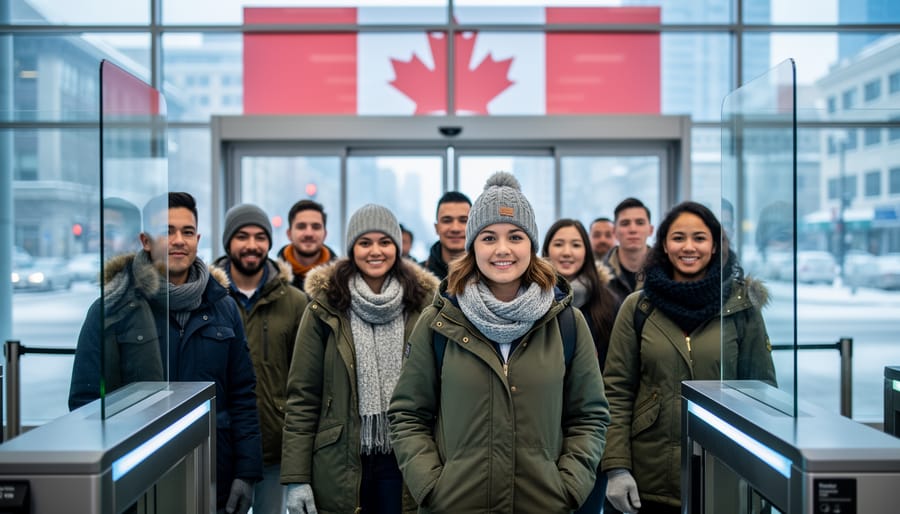
Canada’s visa policy serves as the gateway through which millions of visitors, students, workers, and future citizens enter one of the world’s most welcoming nations. At its core, the system balances two objectives: maintaining border security while keeping doors open to the talent, diversity, and connections that have shaped Canada’s identity for generations. As of February 19, 2026, study permit holders pursuing prerequisite courses like ESL now receive permits valid only for the course duration plus 90 days, requiring them to reapply from within Canada before transitioning to their main program.
This framework, built on decades of evolving legislation and shifting global realities, reflects Canada’s journey from restrictive immigration quotas to today’s points-based, skills-focused approach. Understanding these policies matters not just to prospective applicants navigating forms and processing timelines but to anyone interested in how Canada continues to define itself as a multicultural society. The rules governing who can enter, study, work, or settle here reveal national priorities about economic growth, family reunification, humanitarian protection, and cultural exchange.
The application process itself has modernized considerably, with online submissions now strongly encouraged for most applicants. Only those with disabilities preventing digital access or those holding specialized identity documents for non-national residents, refugees, or stateless persons remain eligible for paper applications. These practical details sit within a larger historical arc, one that traces Canada’s transformation from exclusionary immigration laws to policies celebrating diversity as a national strength, shaping communities from coast to coast through festivals, institutions, and the daily rhythms of Canadian life.
What Changed: The February 2026 Study Permit Rules

On February 19, 2026, Canada introduced two major changes to study permit rules that directly affect international students enrolled in prerequisite programs. Permits for preparatory courses, including English as a Second Language (ESL), French as a Second Language, and other pathway programs, are now issued only for the duration of the course plus 90 days, replacing the previous practice of granting permits that covered both prerequisite and main program timelines. At the same time, students completing these prerequisite courses must now re-apply from within Canada to transition into their main degree or diploma program, rather than receiving a single permit at the outset.
For thousands of students arriving to improve their language skills before entering multicultural classrooms across Canada, these adjustments create a tighter window and an additional administrative hurdle. An ESL student finishing a six-month course, for example, receives a permit valid for nine months total, leaving just three months to secure admission to a main program, gather the necessary documents, and submit a fresh application, all while remaining in Canada. The 90-day buffer is intended to provide time for the transition, but it also demands careful coordination with academic calendars and application deadlines. Students who previously relied on a single, longer permit now face the prospect of waiting for a second decision while already in the country, raising questions about work eligibility, housing leases, and financial planning during the gap.
Key Developments Shaping Canada’s Current Visa Landscape
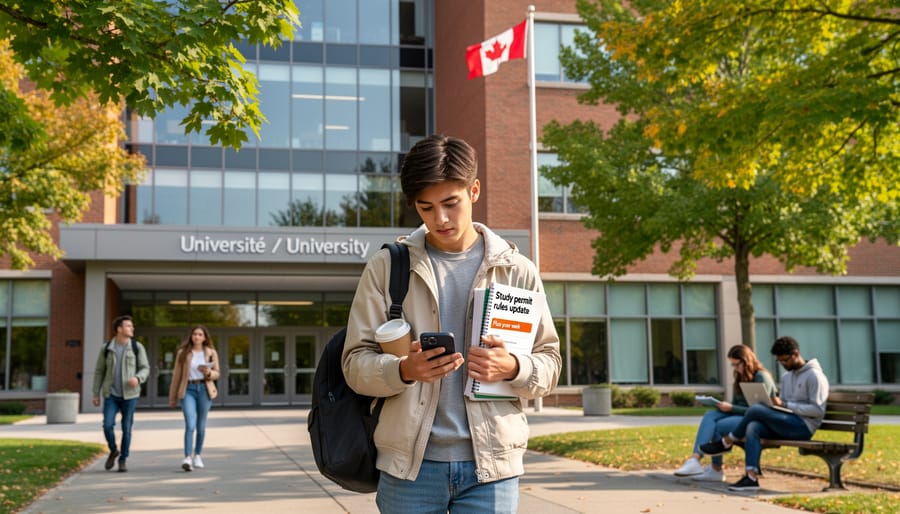
1. Shortened Permit Windows for Prerequisite Studies
As of February 19, 2026, Canada introduced a significant change to study permit durations for students enrolling in prerequisite study permits shortened to match the exact length of the preparatory course plus just 90 days. This marks a departure from the previous practice of issuing permits that covered both the prerequisite program and the subsequent main degree or diploma program in a single authorization.
The immediate impact falls hardest on students planning to take English as a Second Language courses, French immersion programs, or other pathway offerings before entering their main field of study. Under the old system, an applicant admitted to a two-year business diploma following a six-month ESL course could receive a study permit valid for the full two and a half years. Now, that same student receives a permit covering only the six-month language course plus 90 days, requiring a fresh application from within Canada to continue into the business program.
The rationale behind the change reflects Ottawa’s desire for tighter control over who remains in the country and for how long. By capping permits at the prerequisite stage, immigration authorities gain an additional checkpoint to reassess each student’s eligibility and program progression before granting extended stay. It also addresses concerns about students who enroll in short preparatory courses primarily to secure a foothold in Canada without clear plans to advance into substantive programs.
For colleges and private language schools that built recruitment models around seamless pathway offerings, the new rule introduces friction. Students must now budget time and money for a second application process, and there’s no guarantee that changed personal circumstances or updated eligibility criteria won’t complicate approval. The 90-day buffer is meant to cover the transition, but it leaves little room for delays or unexpected complications in the re-application process.
2. New In-Canada Re-Application Requirements
The February 2026 update introduces a fundamental shift in how students navigate pathway programs. Previously, an applicant might receive a single study permit covering both a preparatory course and the subsequent degree program. Now, students completing prerequisite studies, whether ESL instruction, foundation courses, or other qualifying programs, must submit a fresh application from within Canada to transition into their main academic program.
This change breaks the student journey into discrete permit windows. A student arriving for a six-month ESL program receives a permit valid for that course plus 90 days. When the language training ends, they cannot simply roll into their bachelor’s degree under the same authorization. Instead, they must gather new documentation, pay another application fee, and re-enter the immigration process while already on Canadian soil.
The administrative burden is obvious. Students face doubled paperwork, doubled fees, and the logistical challenge of managing a second application while attending classes or preparing for exams. They must track expiry dates carefully, assemble updated proof of enrolment and financial support, and navigate processing times that can stretch weeks or months, all while maintaining valid status. A delayed decision could force a student to pause their studies or leave Canada temporarily, disrupting academic plans and adding stress to an already demanding transition.
The in-Canada requirement does offer one advantage: applicants can leverage local resources, consult immigration advisers face-to-face, and respond quickly to requests for additional information. But the shift undeniably complicates the pathway model that many institutions built their recruitment strategies around, and it demands far more proactive planning from students who once expected a seamless progression from prerequisite to program.
3. Digital-First Application Process with Narrow Paper Exceptions

Canada has moved decisively toward digital applications for study permits, making online submission the default pathway for the vast majority of applicants. Introduced to streamline processing and improve efficiency, this shift reflects a broader trend in immigration systems worldwide, but it leaves narrow exceptions for those who cannot access the online portal. Understanding who qualifies for alternative methods and how to navigate the digital-first framework is essential for prospective students planning their 2026 applications.
Paper applications are limited to two specific groups: applicants with disabilities that prevent them from completing the online form, and those holding identity or travel documents issued to non-national residents, refugees, or stateless persons. Everyone else must apply through the online portal. The disability exception recognizes that not all digital interfaces are accessible, while the document exception accommodates individuals whose legal status does not include standard national passports.
For applicants abroad, the process begins with selecting the country or territory from which you will apply. This determines which visa office handles your file and tailors the instructions to local procedures. The choice matters because different offices may have distinct document requirements or processing protocols, even though the core eligibility criteria remain the same.
Applicants submitting temporary residence applications alongside an authorization to return to Canada (ARC), a temporary resident permit (TRP) consideration, or criminal rehabilitation face additional routing rules:
- If you need a visa to travel to Canada, you can apply online or mail your applications and supporting documents to the nearest visa application centre.
- If you need an electronic travel authorization (eTA) to enter Canada, you must apply online for the eTA, study permit, or work permit.
These pathways reflect the complexity of cases involving inadmissibility or past legal issues. The eTA requirement, which applies to visa-exempt nationals, forces those applicants into the online channel, whereas visa-required nationals retain the option to submit paper applications at a visa application centre when their study permit is bundled with ARC, TRP, or rehabilitation requests.
The digital-first model accelerates most applications and centralizes records, but it assumes reliable internet access, technical literacy, and compatible assistive technology for those with disabilities. Applicants who qualify for paper submission should follow the specific instructions for their visa office and allow additional mailing time. For the majority navigating the online portal, selecting the correct visa office and understanding which additional applications can be filed together are critical steps that prevent delays and ensure the file is routed correctly from the start.
Why It Matters: Policy Changes in Historical Context
The February 2026 study permit adjustments are not policy in a vacuum. They belong to a long Canadian tradition of recalibrating who may enter, why, and under what conditions. From the Chinese Immigration Act of 1885 through the post-war dismantling of racial quotas to the introduction of a points-based system in 1967, Canada’s visa rules have always mirrored the country’s evolving sense of itself. Early legislation favored European settlers and erected explicit barriers against applicants from Asia, Africa, and the Caribbean. By the late 1960s, economic pragmatism and shifting public attitudes drove Ottawa to replace national-origin preferences with skills-based assessments, opening the door to talent from every region. The 1970s and 1980s cemented multiculturalism as official policy, enshrining diversity as a national asset rather than a challenge to manage. Study permits became a key pathway in this transformation, allowing thousands of international students to contribute to Canadian campuses, communities, and eventually the workforce.
Today’s shorter permit windows and in-Canada re-application requirements echo those historical themes. The 2026 rules tighten oversight of prerequisite programs, addressing concerns about students who enroll in language courses but never transition to degree studies. This is economic calculation meeting administrative control, much as the points system balanced humanitarian ideals with labor-market realities. Security and capacity management have likewise persisted across eras: post-9/11 screening intensified vetting procedures, and recent housing shortages in university towns have fueled debates about international student volumes and government funding for infrastructure. Each generation wrestles with the same core question, how many newcomers, in which categories, can Canada welcome and integrate effectively? Study permit policy is simply one lever in that broader machinery, fine-tuned as circumstances demand but anchored in a commitment to openness tempered by order.
What to Watch: Future Directions and Open Questions

The February 2026 study permit revisions leave several questions unanswered, and stakeholders across Canada’s immigration ecosystem should keep a close eye on how the government clarifies, and potentially refines, its approach in the coming months.
First, watch for official guidance on which programs and institutions face the greatest impact. The new 90-day window after prerequisite courses will hit English-as-a-second-language pathways and college bridging programs hardest, but Ottawa has not yet published data showing which schools or sending countries are most affected. Students planning education pathways that combine prerequisite and degree programs deserve clearer timelines and transitional support, yet none has been announced.
Processing times remain another open question. Immigration, Refugees and Citizenship Canada has not updated its published service standards to reflect the new in-Canada re-application requirement for students moving from preparatory courses into main programs. Without transparent benchmarks, applicants cannot accurately plan their arrival, housing, or enrolment. Advocates are pressing the department to release revised processing metrics and to indicate whether additional resources will be allocated to handle the anticipated surge in mid-stream applications.
Pilot programs and exemptions may also emerge. Historically, Canada tests major policy shifts with targeted trials, think of the Atlantic Immigration Pilot or sector-specific work permit streams, before rolling them out nationwide. It is plausible that certain provinces, institutions, or program types could receive temporary carve-outs or expedited processing to smooth the transition and protect enrolment in high-demand fields like healthcare or technology.
Finally, be alert to potential rollbacks or expansions. If the data show that shortened permit durations are discouraging qualified applicants without meaningfully improving program integrity, the government may adjust course. Conversely, stricter measures could extend to other visa categories if stakeholders perceive gaps in oversight. Either way, the conversation is far from over.
Common Questions About Canada’s Visa Policy in 2026
Who needs a study permit to come to Canada?
International students planning to attend a program longer than six months at a designated learning institution in Canada generally need a study permit. Short-term courses, visits by certain temporary residents, and minors attending kindergarten or elementary school may have different requirements, so check official guidelines for your situation.
Can I still submit a paper study permit application?
Applicants are strongly encouraged to apply online. You’re eligible to apply on paper only if you have a disability that prevents you from applying online, or if you hold an identity document or travel document for non-national residents, refugees, or stateless persons.
What happens if I’m enrolled in a prerequisite program like ESL?
As of February 19, 2026, permits for prerequisite courses are issued only for the duration of the course plus 90 days. Once you finish, you must re-apply from within Canada to transition into your main program of study.
How does the study permit relate to eTA requirements?
If you need an electronic travel authorization to enter Canada and you’re applying for a temporary residence permit alongside an authorization to return to Canada, temporary resident permit consideration, or criminal rehabilitation, you must apply online for the eTA, study permit, or work permit together. Your travel document determines which pathway you follow.
Do I select a visa office when applying from abroad?
Yes. If you’re applying from outside Canada, you must select the country or territory from which you will be applying to receive instructions specific to your local visa office.
How have Canada’s visa policies evolved over time?
Canada’s approach has shifted dramatically from exclusionary laws in the early 20th century to the merit-based points system introduced in 1967 and the multicultural framework of the 1970s and 80s. Each era’s visa rules reflected economic needs, security priorities, and evolving values around who could enter and settle, shaping the diverse nation we see today.
These questions capture the practical concerns of applicants navigating Canada’s current system while acknowledging the historical arc that brought the country to this point. The February 2026 changes add a new layer of procedural complexity for students in pathway programs, so understanding permit durations and re-application requirements has become essential. At the same time, the digital-first mandate streamlines most applications, reserving paper options for specific accessibility or documentation scenarios. Whether you’re a first-time applicant or a policy observer, these answers ground you in both the mechanics of today’s framework and the broader story of how Canada has continually rewritten its rules to balance opportunity, control, and the values it holds dear.
Canada’s visa policy remains what it has always been: a reflection of the country’s evolving identity and priorities. The February 2026 study permit adjustments are not isolated tweaks, they’re the latest chapter in a conversation that stretches back more than a century, from the restrictive Head Tax to the transformative points system and the embrace of multiculturalism. Each shift, whether driven by economic demand, security concerns, or capacity constraints, reveals how Canada negotiates its dual role as a welcoming destination and a sovereign state managing its borders.
For anyone navigating this landscape, students, families, educators, advocates, the takeaway is clear: visa policies will continue to change. Check official government sources regularly for the most current guidance, and recognize that today’s rules are not carved in stone. They’re part of an ongoing dialogue about who Canada is and who it aspires to be. That dialogue is richer and more inclusive when informed voices participate, when diverse communities share their stories, and when policies adapt to honor both practicality and principle. Canada’s immigration story isn’t finished. It’s still being written, one policy update, one newcomer, one shared experience at a time.