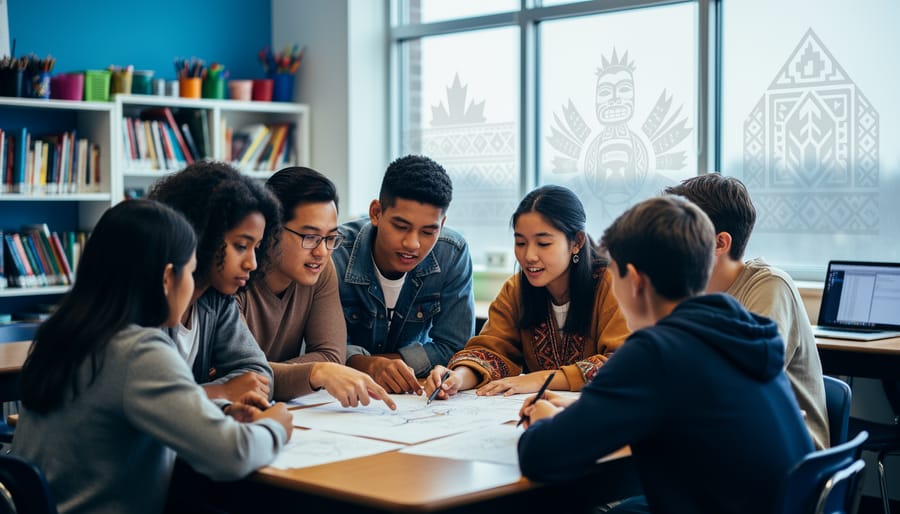
Education that is multicultural transforms classrooms from spaces that merely acknowledge diversity into environments that actively dismantle systemic inequities and empower all students to become agents of social change. Unlike conventional multicultural education, which often stops at celebrating cultural festivals or adding diverse perspectives to curricula, this approach embeds social justice and equity into every aspect of teaching and learning. It challenges educators to examine their own biases, restructure power dynamics in their classrooms, and ensure that students from marginalized communities see their histories, languages, and experiences reflected and valued throughout their educational journey.
In Canada’s 2026 educational landscape, this distinction matters profoundly. While our nation celebrates its official multiculturalism policy, classrooms still reflect persistent achievement gaps, disciplinary disparities, and curriculum gaps that privilege certain narratives over others. When a Cree student in Saskatchewan learns Indigenous history only through a colonial lens, or when a newcomer family from Syria finds their child’s linguistic strengths treated as deficits rather than assets, the limitations of surface-level diversity approaches become clear.
Education that is multicultural asks more of us. It requires teachers to redesign assessment practices that disadvantage English language learners, to challenge textbooks that marginalize racialized communities, and to create spaces where students examine systemic racism, colonialism, and other forms of oppression. The philosophy recognizes that genuine inclusion demands structural change, not just good intentions.
This approach has gained urgency across Canadian provinces as demographics shift and calls for truth and reconciliation intensify. Educators now face a critical choice: maintain comfortable celebrations of difference, or embrace the harder work of transformation that this framework demands.
What ‘Education That Is Multicultural’ Really Means
Most educators have heard of multicultural education, those units on world cultures, heritage month celebrations, or diverse authors added to reading lists. But education that is multicultural operates at a fundamentally different level. The distinction isn’t semantic nitpicking; it represents a shift from decoration to foundation.
Traditional multicultural education treats diversity as supplementary content. Teachers might dedicate a week to Chinese New Year or assign a novel by an Indigenous author, then return to a curriculum designed around a single cultural perspective. The structure remains unchanged. Students learn about other cultures as separate topics, not as integral to how we understand science, history, mathematics, or any subject.
Education that is multicultural, by contrast, is more than content added to an existing framework. It transforms how schools operate from the ground up. Every curriculum choice, teaching method, assessment practice, and school policy reflects an understanding that diverse perspectives aren’t extras, they’re essential to truth itself. Knowledge isn’t neutral or universal; it’s constructed through cultural lenses, and recognizing multiple lenses gives us clearer, more complete understanding.
- Multicultural Education
- An approach that adds diverse cultural content and perspectives to an existing curriculum structure, often through special units, celebrations, or supplementary materials.
- Education That Is Multicultural
- A transformative philosophy that restructures the entire educational system, curriculum, pedagogy, assessment, and school culture, to reflect multiple cultural perspectives as fundamental to all learning.
- Additive Approach
- The practice of incorporating diverse content into a curriculum without changing its underlying structure or challenging the dominant cultural narrative.
- Transformative Approach
- A systemic shift that questions whose knowledge counts, how it’s taught, and who succeeds, making equity and cultural responsiveness central to every educational decision.
This philosophy permeates everything. In a math class, it might mean exploring how different cultures developed number systems and geometric concepts, not just teaching Western mathematical traditions as if they emerged in a vacuum. In science, it means acknowledging Indigenous ecological knowledge alongside laboratory methods. School discipline policies reflect cultural differences in communication and conflict resolution rather than imposing one standard of “appropriate” behaviour.
The work extends beyond classroom walls into how schools engage families and communities. Parent-teacher communication respects diverse linguistic and cultural norms. Community members from various backgrounds shape curriculum and school priorities, not as occasional guests but as ongoing partners. The entire school culture shifts from tolerating diversity to being actively transformed by it.
The Canadian Context: Why Our Classrooms Need This Shift
Beyond Mosaic Metaphors: Living Diversity
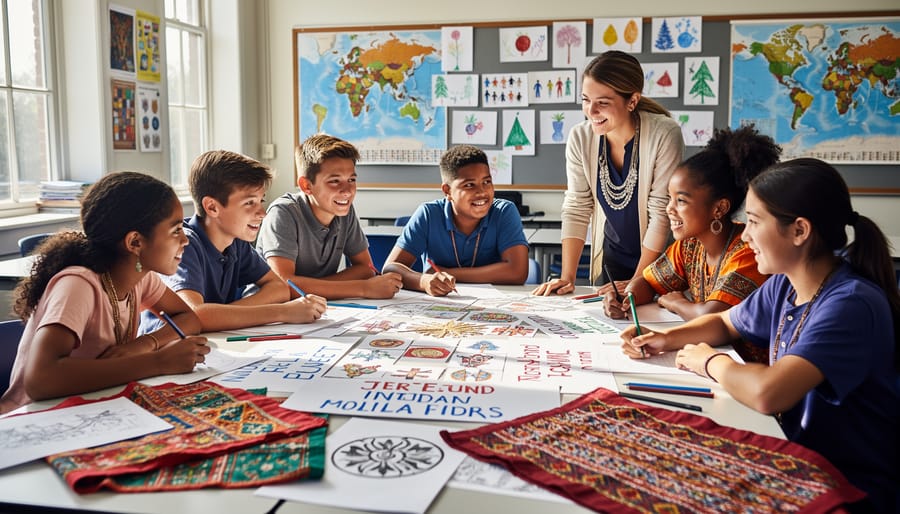
Canada’s beloved “cultural mosaic” metaphor, where distinct cultural groups maintain their unique identities within a unified whole, sounds beautiful in theory. In practice, many Canadian classrooms have interpreted this as a collection of static tiles: Ukrainian dance performances during Heritage Week, spring rolls at the multicultural fair, Diwali decorations in November. These gestures matter, but they often freeze cultures in time, reducing living traditions to artifacts.
This is where the mosaic metaphor breaks down. Real cultures don’t sit neatly in separate tiles. They interact, evolve, and reshape each other constantly. A second-generation Canadian-Korean student might love both kimchi and poutine, celebrate both Lunar New Year and Canada Day, and speak English peppered with Korean phrases and Toronto slang. Their identity isn’t a single tile, it’s fluid, layered, and constantly negotiated.
Education that is multicultural recognizes this living diversity. Rather than showcasing cultures as museum exhibits once yearly, it weaves cultural perspectives into daily learning. Math problems feature names reflecting classroom demographics. History explores how different communities experienced the same events. Literature includes voices that reflect students’ actual lives, not stereotyped representations.
The shift moves from “celebrating diversity” (passive appreciation) to “living diversity” (active engagement). Students don’t just learn about other cultures, they develop the skills to navigate, question, and contribute to Canada’s evolving multicultural reality. That’s a framework responsive to 2026’s classrooms, where identity is complex and culture is always in motion.
Truth and Reconciliation in the Classroom
When Canadian educators embrace education that is multicultural, they find a natural partner in the Truth and Reconciliation Commission’s 94 Calls to Action, particularly those addressing education. This isn’t coincidence. Both frameworks recognize that genuine inclusion requires systemic change, not surface-level additions.
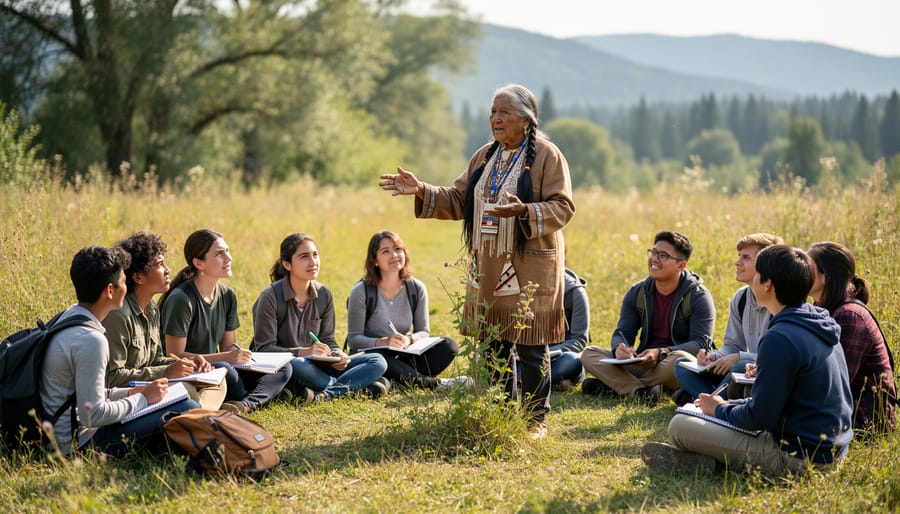
Education that is multicultural provides the philosophical foundation for meaningful reconciliation work in schools. It challenges the Eurocentric structures that marginalized Indigenous knowledge systems for generations, creating space for First Nations, Métis, and Inuit perspectives to inform curriculum design, not just supplement it. This means moving beyond dedicating a week to Indigenous culture or adding a land acknowledgment to morning announcements.
In practice, this alignment transforms how schools approach everything from science curricula (integrating Indigenous ecological knowledge as valid scientific methodology) to governance structures (consulting with Elders and Indigenous communities in decision-making). Teachers trained in education that is multicultural understand that reconciliation isn’t a checkbox, it’s an ongoing process of relationship-building, power-sharing, and institutional humility.
The framework also addresses a critical tension: how do we honor Indigenous sovereignty and distinct rights while building inclusive communities? Education that is multicultural acknowledges that different groups have different historical relationships with Canadian institutions. It creates room for Indigenous-focused initiatives within broader equity efforts, recognizing that reconciliation requires specific, dedicated action alongside, not instead of, other diversity work.
Five Pillars of Education That Is Multicultural
James Banks, the scholar who shaped much of our understanding of multicultural education, identified five dimensions that together create what we mean by education that is multicultural. These aren’t checkboxes to tick off; they’re interconnected pillars that support a fundamentally transformed learning environment.
Content integration moves beyond the February Black History Month bulletin board or the Diwali potluck. It means weaving diverse cultural perspectives, examples, and contributions throughout the curriculum, every day. A Grade 10 history class in Winnipeg doesn’t just add a unit on Louis Riel, it examines how Métis perspectives challenge the dominant narrative of Canadian nation-building. A science teacher in Halifax doesn’t simply mention that diverse scientists exist; she teaches how Indigenous knowledge systems have shaped environmental science and includes Mi’kmaq astronomers alongside Galileo when discussing celestial navigation.
Knowledge construction asks students to examine how cultural assumptions, frames of reference, and biases shape what gets counted as knowledge. When Vancouver students analyze who wrote their textbooks, what voices are centered, and whose stories are marginalized or missing entirely, they’re learning to think critically about knowledge itself. A Grade 8 English class might compare how the story of Confederation appears in French and English textbooks, or how Indigenous oral histories present different truths than written colonial records. This pillar teaches students that knowledge isn’t neutral, it’s constructed by people with particular perspectives.
Prejudice reduction involves deliberate strategies to help students develop more positive attitudes toward different cultural, ethnic, and religious groups. This isn’t wishful thinking; it’s evidence-based work. Teachers use cooperative learning structures that bring students from different backgrounds together on meaningful tasks. They carefully select literature that presents nuanced, authentic portrayals of diverse characters rather than stereotypes. A Calgary elementary school might use persona dolls, dolls with detailed cultural backgrounds, to help young students discuss differences, challenge assumptions, and develop empathy.
Equity pedagogy requires teachers to modify their instruction to facilitate academic achievement for students from diverse backgrounds. This means recognizing that the traditional lecture format advantages some learners while disadvantaging others, and that what counts as “participation” reflects cultural norms about speaking up that not all students share. A teacher practicing equity pedagogy might use talking circles, offer multiple ways to demonstrate learning, incorporate storytelling, and adjust wait time after questions to accommodate different cultural communication patterns. It’s not lowering standards, it’s recognizing that one-size-fits-all teaching leaves many students behind.
Empowering school culture extends beyond individual classrooms to transform the entire school environment. This means examining tracking practices that sort students along racial lines, ensuring extracurricular activities reflect diverse interests, hiring staff who mirror the student body, and giving all families genuine voice in school decisions. A school with an empowering culture doesn’t just tolerate diversity, it actively dismantles the structures that create educational inequity while celebrating the cultural wealth students bring through their doors.
These five pillars work together. Content integration without equity pedagogy means diverse examples taught in ways that still exclude some learners. Knowledge construction without an empowering school culture means critical thinking stops at the classroom door. Canadian schools making real progress attend to all five dimensions simultaneously.
What This Looks Like in Practice: Canadian Classrooms Leading the Way
From Toronto to Tofino: Regional Approaches
Canada’s geographic and demographic diversity means education that is multicultural takes different shapes across regions. In Toronto, where over half the population is foreign-born, schools navigate what educators call “superdiversity”, classrooms where thirty students might represent twenty different language backgrounds. Here, the approach emphasizes multilingual learning resources, heritage language programs, and peer mentorship models that position students as cultural knowledge holders rather than deficits to overcome.
Move west to the Prairies, and you’ll find schools grappling with different realities. Saskatchewan classrooms often serve significant Indigenous populations alongside Ukrainian, Filipino, and Syrian communities. Education that is multicultural here means centering Treaty education while simultaneously honoring newcomer experiences, creating spaces where a Cree student’s traditional knowledge and a recent immigrant’s journey both shape the curriculum.
On Vancouver Island, Tofino’s small schools demonstrate that education that is multicultural isn’t just for urban centres. With coastal First Nations communities, seasonal workers from various countries, and established settler populations, these classrooms weave together Nuu-chah-nulth perspectives, ocean-based learning, and global citizenship education scaled to intimate settings where every student’s cultural identity becomes visible curriculum.
The Atlantic provinces face their own dynamics, with historically homogeneous communities experiencing rapid demographic shifts. Here, education that is multicultural often means deliberate community dialogue, bringing together long-established residents and newcomers to co-create inclusive school cultures that acknowledge both change and continuity.
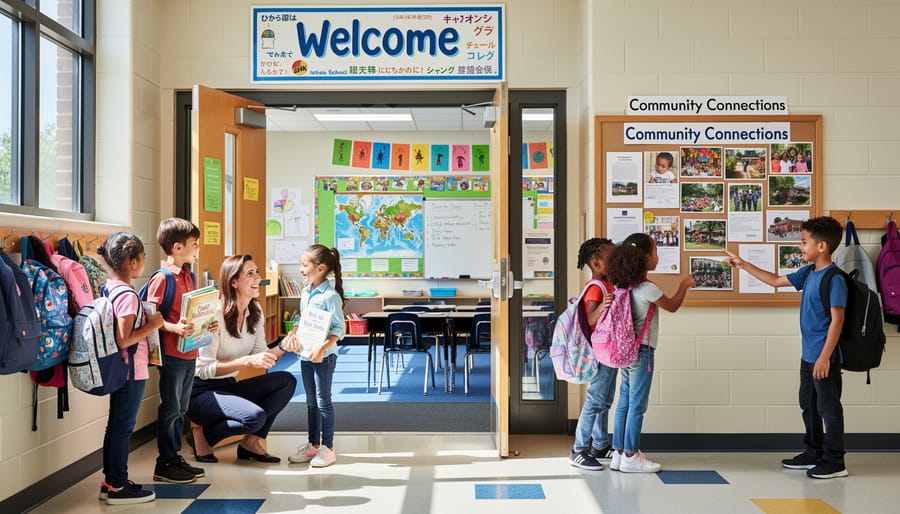
The Role of Cultural Festivals and Community Partnerships
Schools that embrace education that is multicultural understand that the most powerful learning happens when students step beyond classroom walls and engage directly with living cultures. Community cultural festivals and partnerships transform abstract concepts into visceral experiences that students remember long after graduation.
Take the Calgary Stampede’s Indigenous Village. Teachers who partner with this program don’t just teach about First Nations culture, their students learn traditional dance from Elders, participate in tipi raising, and hear stories passed down through generations. These encounters build relationships and respect in ways no textbook chapter can replicate.
Similarly, schools in Vancouver’s diverse neighborhoods collaborate with organizations like the Vancouver Inter-Cultural Orchestra, where students from different backgrounds create music together, blending instruments and traditions. The partnership model extends learning beyond performance attendance into collaborative creation, giving students ownership of multicultural expression.
Festival partnerships work best when schools integrate them throughout the year rather than treating them as isolated field trips. A school near Toronto’s Greektown doesn’t just attend the Taste of the Danforth festival, students work with restaurant owners beforehand, learning about immigration stories, traditional recipes, and the economics of cultural entrepreneurship. The festival becomes a culminating experience in a semester-long exploration.
Community partnerships also provide crucial resources for schools in less diverse areas. Rural schools in Saskatchewan connect virtually with urban cultural organizations, bringing guest speakers, artists, and cultural practitioners into classrooms through technology. These relationships break down the barriers of geography and resources that might otherwise limit authentic multicultural education.
The key is reciprocity. Effective partnerships serve both the school and the community, with students contributing meaningfully to festivals and cultural events rather than simply consuming them as spectators.
The Challenges: Why This Transformation Isn’t Easy
Transforming Canadian classrooms into spaces where education is truly multicultural requires more than good intentions. Despite growing recognition of its value, this approach faces substantial headwinds that slow progress across the country.
Resistance to change tops the list of obstacles. Many educators trained in traditional methods feel overwhelmed by the prospect of redesigning their entire approach rather than simply adding diverse content. Some view it as unnecessary complexity or worry about losing academic rigor. Parents occasionally push back too, questioning why schools should move beyond the “basics” they remember from their own education.
Resource limitations create practical barriers. Developing culturally responsive curricula demands time, materials, and expertise that stretched school budgets struggle to provide. Teachers need quality professional development, not one-off workshops, yet ongoing training programs remain scarce. Smaller districts and rural schools face particular challenges accessing specialized resources and connecting with diverse community partners.
Teacher preparation programs haven’t kept pace with classroom realities. Many new teachers enter schools serving highly diverse populations without adequate training in culturally responsive pedagogy or anti-bias education. Even educators committed to this work often lack concrete strategies for implementing it effectively across subject areas.
- Creates more equitable learning environments where all students see themselves reflected and valued.
- Prepares students with cross-cultural competencies essential for Canada’s multicultural society and global economy.
- Reduces achievement gaps by addressing cultural biases embedded in traditional educational structures.
- Strengthens community connections by involving diverse families and cultural groups as educational partners.
- Requires significant investment in teacher training and curriculum development that many districts can’t afford.
- Faces resistance from educators and families comfortable with traditional approaches and wary of change.
- Creates tension with standardized testing systems that don’t measure culturally responsive outcomes.
- Demands ongoing effort to avoid superficial tokenism and ensure authentic cultural representation.
Perhaps the most persistent challenge is the tension between standardized testing and culturally responsive teaching. Provincial assessments still largely reflect dominant cultural perspectives and knowledge frameworks. Teachers feel caught between fostering inclusive, equity-focused classrooms and preparing students for tests that reward specific cultural capital. This conflict discourages risk-taking and pushes educators back toward conventional methods that align with standardized measures.
These barriers aren’t insurmountable, but they’re real. Acknowledging them honestly is the first step toward developing realistic strategies that move Canadian education forward.

How Educators and Communities Can Make the Shift
Making the shift to education that is multicultural doesn’t require a complete overhaul overnight. Start with one classroom, one curriculum unit, or one professional learning community. Small, intentional changes create momentum.
For Teachers: Begin Where You Are
Audit your current curriculum materials. Count how many voices, perspectives, and cultural examples appear in your textbooks and resources. If your grade 8 history unit on Confederation features only European-Canadian voices, that’s your starting point. Supplement with primary sources from Métis, Chinese railway workers, or Black Loyalist communities. The Canadian Museum of History and provincial archives offer digitized materials specifically designed for classroom use.
Rethink your assessment practices. Does your rubric privilege one communication style or way of knowing? A student explaining a math concept through storytelling demonstrates understanding as validly as a written proof. Create multiple pathways for students to show what they’ve learned.
Connect with colleagues who’ve started this work. Many school boards across Canada now have equity and inclusion departments offering workshops, mentorship, and ready-made resources. The Ontario Teachers’ Federation runs annual institutes on culturally responsive pedagogy. The BC Teachers’ Federation maintains an extensive social justice resource library.
For Administrators: Create the Conditions
Professional development matters, but one-off workshops don’t create lasting change. Budget for sustained learning over multiple years. Partner with organizations like the Canadian Race Relations Foundation or local cultural centres to design training that reflects your community’s specific demographics and needs.
Examine your hiring practices. A teaching staff that mirrors student diversity sends a powerful message. Recruit at culturally specific job fairs and universities known for graduating diverse educators.
For Parents and Community Members: Your Voice Matters
Attend school council meetings and ask specific questions. What multicultural content appears in your child’s curriculum? How does the school address incidents of bias? Request transparency about discipline data broken down by ethnicity, disparities often reveal systemic problems.
Volunteer your expertise. If you’re fluent in Punjabi, offer to read to primary classes. If you celebrate Eid, Lunar New Year, or Diwali, share your traditions. Schools need community knowledge to move beyond tokenism.
The shift happens through accumulated small actions, not grand pronouncements. Start today.
Canada stands at a crossroads in 2026, and our classrooms hold the compass. Education that is multicultural is not just another pedagogical trend or a box to check on a curriculum document. It represents a fundamental reimagining of what schools can be: spaces where every student sees themselves reflected, every culture contributes to the collective learning, and diversity becomes the foundation rather than the footnote.
This approach prepares all students for the reality they already inhabit. In an interconnected world where collaboration crosses borders and careers demand cultural agility, students who experience education that is multicultural develop critical skills: perspective-taking, navigating difference, questioning assumptions, and building bridges across communities. These are not soft skills. They are survival skills for the 21st century.
The transformation happening in Canadian classrooms today matters beyond our borders. As schools move from celebrating diversity one month per year to embedding it in every lesson, every policy, and every interaction, they model what inclusive education looks like in practice. Teachers who question whose knowledge counts, administrators who restructure discipline policies through an equity lens, and students who learn to challenge systemic bias are writing a new story about what education can achieve.
The vision is clear: classrooms where Indigenous ways of knowing sit alongside Western science, where multilingualism is an asset rather than a deficit, and where every student graduates equipped to build a more just society. That Canada is possible, and it starts in our schools.