
Canada’s immigration policies have transformed the nation from a restrictive, ethnically selective gatekeeper into one of the world’s most welcoming destinations for newcomers, a journey marked by both shameful exclusions and groundbreaking openings. This evolution spans over 150 years, from the Chinese Head Tax of 1885 and the turning away of the Komagata Maru in 1914, through the landmark 1967 points system that replaced racial quotas with merit-based selection, to today’s Express Entry framework processing hundreds of thousands of permanent residents annually.
Understanding this history reveals why Canadian cities now host vibrant Lunar New Year parades, Caribbean Carnival celebrations, and Diwali festivals that draw millions. The policies that once banned entire ethnicities gave way to official multiculturalism in 1971, a world-first that redefined national identity. Every shift in immigration law created ripples that show up in the languages spoken on Toronto streetcars, the restaurants lining Vancouver’s Commercial Drive, and the cultural programming that fills public spaces from coast to coast.
The story isn’t linear or simple. Refugee policies opened doors after global crises, then tightened during economic downturns. Provincial nominee programs spread newcomers beyond traditional gateway cities. Temporary foreign worker streams grew alongside permanent pathways. Each chapter reveals tensions between economic needs, humanitarian commitments, and public opinion, tensions that continue shaping debates in 2026.
This historical journey explains why Canada stands out globally for immigration levels exceeding one percent of its population most years, why certain communities cluster in specific regions, and how past injustices inform current reconciliation efforts. The policies that built modern Canada left a complex legacy written in census data, citizenship ceremonies, and the faces you see at any community gathering across the country.
The Foundation Years: Selective Settlement and Nation-Building (1867-1914)

When Canada became a nation in 1867, its vast western territories stretched empty and unmapped, a geographic reality that shaped the young country’s first immigration policies. The government faced an urgent challenge: transform millions of acres of prairie into productive farmland before American expansion claimed the region. Immigration wasn’t simply about welcoming newcomers. It was a calculated nation-building strategy with explicit preferences for who would populate this new country.
The Dominion Lands Act of 1872 became the engine of western settlement, offering 160 acres of free land to any male homesteader willing to cultivate it. The catch lay in the fine print. Officials envisioned a Canada modelled on British institutions and values, which meant actively recruiting from Britain and select European nations while discouraging or blocking others. Immigration agents fanned across England, Scotland, and Ireland with glossy pamphlets portraying the prairies as an agricultural paradise. Similar campaigns targeted Scandinavia, Germany, and parts of Eastern Europe when British recruitment fell short of quotas.
Minister of the Interior Clifford Sifton, who held the immigration portfolio from 1896 to 1905, famously declared he wanted “a stalwart peasant in a sheepskin coat” for the prairies, not urban labourers. His aggressive recruitment brought Ukrainian, Polish, and Russian immigrants to the west, though even this expansion maintained clear hierarchies. British immigrants received settlement support and land access that others didn’t. Pamphlets produced in multiple languages promised prosperity, but the welcome varied dramatically based on ethnic origin.
By 1914, Canada’s population had surged from 3.5 million to over 7.8 million, with the western provinces transformed from frontier outposts to agricultural regions. This explosive growth came at a deliberate cost. The same period saw increasing restrictions on Asian immigration, head taxes on Chinese workers, and continuous journey regulations designed to prevent South Asian arrivals. Indigenous peoples, already inhabiting these lands for millennia, found themselves excluded from homestead provisions on their own territories, forced onto reserves while newcomers claimed what had been taken from them.
These foundation policies established a pattern that would persist for decades: immigration as a tool of economic development and demographic engineering, with acceptance determined not by individual merit but by racial and ethnic categories that officials deemed desirable or threatening.
The Era of Exclusion: Race-Based Restrictions (1885-1947)

Canada’s journey toward multiculturalism required confronting decades of deliberate exclusion. Between 1885 and 1947, federal immigration policy operated as a gatekeeper designed to preserve what lawmakers called “the character of the nation”, a euphemism for maintaining white, British dominance. These weren’t accidental oversights or unfortunate side effects; they were calculated restrictions written into law, enforced at borders, and defended in Parliament.
The Chinese Head Tax, introduced in 1885, charged Chinese immigrants $50 upon arrival, a sum that rose to $500 by 1903, roughly two years’ wages for a labourer. After helping build the Canadian Pacific Railway, Chinese workers found themselves unwelcome once the track was laid. When the tax failed to stem arrivals completely, Parliament passed the Chinese Immigration Act in 1923, banning Chinese immigration outright until its repeal in 1947. Families were separated for decades. Children grew up without fathers. The message was clear: your labour was wanted; your presence was not.
South Asian immigrants faced the 1908 continuous journey regulation, which required arrivals to come via uninterrupted voyage from their country of origin. Since no shipping company offered direct service from India to Canada, the rule created an impossible barrier. The Komagata Maru incident in 1914 exposed the cruelty of this policy when 376 passengers, mostly Sikhs, were denied entry and forced to return to India after two months anchored in Vancouver harbour.
| Policy | Target Group | Year Implemented | Year Repealed |
|---|---|---|---|
| Chinese Head Tax | Chinese immigrants | 1885 | 1923 (replaced by total ban) |
| Chinese Immigration Act | Chinese immigrants | 1923 | 1947 |
| Continuous Journey Regulation | South Asian immigrants | 1908 | 1947 |
| Japanese Canadian Internment | Japanese Canadians | 1942 | 1949 |
World War II brought fresh injustices. More than 22,000 Japanese Canadians, 75 percent of them citizens, were forcibly relocated from the West Coast in 1942, their property seized and sold. Families were torn apart, businesses destroyed, communities scattered. No charges were filed. No evidence of disloyalty existed. Race alone determined their fate.
Jewish refugees fleeing Nazi persecution met closed doors. Between 1933 and 1948, Canada admitted fewer than 5,000 Jewish refugees, one of the worst records among Western nations. The infamous 1939 rejection of the MS St. Louis, carrying 907 Jewish passengers, exemplified official policy. Immigration Director Frederick Blair’s stance, “none is too many”, summarized the government’s position.
Indigenous peoples, meanwhile, lived under the Indian Act’s restrictive provisions, unable to vote federally until 1960 and subjected to policies that separated children from families through residential schools. They were excluded from full participation in a nation built on their ancestral lands.
These exclusions weren’t anomalies. They shaped who could call Canada home for over six decades, creating demographic patterns and community scars that persisted long after the laws changed. Understanding this history means recognizing that Canada’s current multicultural identity emerged despite these policies, not because the nation always embraced diversity.
Post-War Transformation: The Shift Toward Merit (1947-1967)
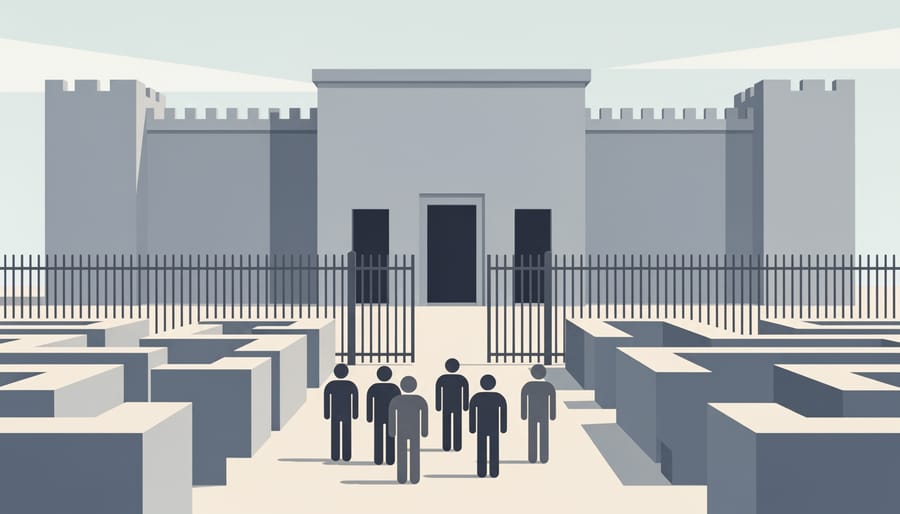
The horror of the Holocaust and the undeniable contributions of non-white Canadians during World War II made the nation’s race-based immigration restrictions morally indefensible. In 1947, Prime Minister Mackenzie King stood before Parliament and acknowledged this uncomfortable truth, announcing the repeal of the Chinese Immigration Act that had blocked virtually all Chinese immigration for 24 years. The post-war transformation had begun, though King’s speech revealed the tensions ahead: he declared that immigration could expand without altering Canada’s “fundamental character,” a euphemism that preserved considerable discriminatory discretion.
The 1950s brought incremental change driven by contradictory pressures. Canada needed workers for its booming post-war economy, but officials still preferred Europeans. The 1952 Immigration Act granted cabinet ministers sweeping authority to admit or exclude immigrants based on nationality, ethnicity, geography, and “peculiar customs.” Southern Europeans, Greeks, and Italians arrived in larger numbers to fill labour shortages, though they faced quota restrictions British immigrants didn’t. The Act’s language was deliberately vague, allowing officials to reject applicants without explicitly stating racial reasons.
Cold War politics accelerated reform. As Canada positioned itself as a defender of freedom and human rights internationally, Soviet propaganda highlighted Western racism and immigration barriers. The 1956 Hungarian Revolution prompted Canada to accept 37,000 refugees quickly, demonstrating that humanitarian crises could override traditional ethnic preferences when political calculation aligned with compassion.
The 1960 Canadian Bill of Rights marked a philosophical shift, declaring equality before the law regardless of race, national origin, or religion. Though it lacked constitutional force and didn’t immediately transform immigration practice, it established principles that made discriminatory policies harder to defend publicly. By the early 1960s, Caribbean and South Asian immigration began increasing, though arbitrary visa office decisions still created significant barriers.
Economic pragmatism ultimately drove change more than ideology. Labour shortages in specific sectors forced recognition that skilled workers and educated professionals could contribute regardless of birthplace. By 1962, new regulations eliminated most overt racial discrimination in immigration selection, focusing instead on education, skills, and employment prospects. The door was opening, but it would take the 1967 points system to prop it fully ajar.
The Points System Revolution: Skills Over Origins (1967-Present)
Canada made history in 1967 by becoming the first country to adopt a points-based immigration selection system. This revolutionary framework dismantled the race and nationality preferences that had shaped Canadian immigration for a century, replacing subjective criteria with objective assessments of skills and potential contributions. Under the new system, applicants earned points across six categories: education, language proficiency, employment experience, age, arranged employment, and adaptability. The government set a minimum threshold, and anyone meeting it could immigrate regardless of birthplace or ethnicity.
The immediate impact transformed who came to Canada. Within five years, the proportion of European immigrants dropped from over 80% to under 50%, while arrivals from Asia, Africa, the Caribbean, and Latin America surged. Engineers from India, doctors from Pakistan, entrepreneurs from Hong Kong, and skilled tradespeople from the Philippines now qualified based on what they could do, not where they were from. The demographic shift rippled through Canadian cities as new cultural communities established themselves, opening businesses, building places of worship, and enriching the cultural fabric.
The system evolved continually as economic needs changed. In 1986, Canada introduced the Business Immigration Program to attract investors and entrepreneurs. The 1990s brought refinements that placed greater weight on language skills after studies showed language proficiency directly affected economic integration. Provincial Nominee Programs launched in the late 1990s, allowing provinces to select immigrants matching regional labour market needs, decentralizing what had been a purely federal process.
The most significant overhaul came in 2015 with Express Entry, a fully digital system managing applications for skilled workers, tradespeople, and Canadian experience class candidates. Express Entry operates as an expression of interest model. Candidates create profiles and receive Comprehensive Ranking System scores based on human capital factors. The highest-ranking candidates receive invitations to apply during regular draws, with most applications processed within six months. The system responds dynamically to labour shortages through category-based selections targeting specific occupations, French speakers, or trade workers.
Today’s points system bears little resemblance to its 1967 predecessor in complexity, yet the core principle remains unchanged. Canada still chooses immigrants based on their potential to contribute economically and integrate successfully, treating education, skills, and adaptability as the currency that opens doors. This approach hasn’t just populated the country; it redefined what citizenship means in a modern nation.
Multiculturalism as Official Policy: The 1971 Watershed

On October 8, 1971, Prime Minister Pierre Trudeau stood before Parliament and fundamentally redefined what it meant to be Canadian. His declaration of multiculturalism as official government policy broke with centuries of assimilation-focused immigration approaches used across the Western world. Rather than expecting newcomers to shed their cultural identities and adopt a single Canadian mold, Trudeau’s policy recognized that cultural diversity itself strengthened the nation. Canada became the first country to adopt multiculturalism at the federal level, establishing what would become a multicultural blueprint that other nations would later study and adapt.
The 1971 policy articulated four core principles: supporting cultural groups in retaining their identities, helping all Canadians overcome barriers to full participation in society, promoting exchanges between cultural communities, and assisting newcomers in acquiring at least one official language. This framework acknowledged that asking people to abandon their heritage was neither necessary for national unity nor reflective of Canadian values. The policy allocated federal funding for cultural associations, language preservation programs, and community centres that helped immigrant groups maintain connections to their traditions while building new lives.
The philosophical shift had immediate practical effects. Federal grants supported the establishment of cultural schools teaching heritage languages to second-generation Canadians. Community organizations received funding to host festivals celebrating diverse traditions, laying groundwork for events like Toronto’s Caribana, Vancouver’s Vaisakhi parades, and Edmonton’s Heritage Festival that draw millions of participants today. These weren’t token celebrations but expressions of a policy commitment that cultural retention benefited all Canadians.
The 1988 Canadian Multiculturalism Act gave legislative force to Trudeau’s declaration, making multiculturalism law rather than just policy. The Act mandated that federal institutions reflect Canada’s diversity in their operations and service delivery, established the Canadian Multiculturalism Council to advise the government, and created accountability mechanisms to ensure the policy translated into action across departments. This legal framework meant multiculturalism became embedded in how Canada functions, from bilingual product labels to workplace diversity initiatives to the cultural programming Canadians experience in libraries, museums, and public spaces.
Contemporary Framework: Economic, Family, and Humanitarian Streams
Canada’s immigration system operates through three distinct streams, each designed to meet specific national priorities while upholding humanitarian commitments. Understanding how these pillars work reveals the practical machinery behind the country’s multicultural character.
The economic stream dominates admission numbers, accounting for roughly 60 percent of all newcomers. Express Entry manages applications for skilled workers through a competitive ranking system that awards points for age, education, work experience, language proficiency in English or French, and Canadian connections. Candidates with the highest scores receive invitations to apply during regular draws. Provincial Nominee Programs allow individual provinces and territories to select candidates who meet local labour market needs, from tech workers in British Columbia to agricultural specialists in Saskatchewan. Business immigration streams target entrepreneurs and investors willing to establish operations and create jobs, while caregiver programs address chronic shortages in childcare and eldercare sectors.
- Express Entry
- An electronic system managing applications for skilled worker programs, ranking candidates by points and inviting top scorers to apply for permanent residence.
- Provincial Nominee Programs
- Immigration pathways where provinces select candidates who meet specific regional labour market needs and economic priorities.
- Family Class Sponsorship
- The process allowing Canadian citizens and permanent residents to sponsor spouses, children, parents, and grandparents for immigration.
- Protected Persons
- Individuals granted refugee status or protected status in Canada due to fear of persecution, torture, or risk to life in their home country.
- Temporary Foreign Workers
- Non-citizens authorized to work in Canada for a specific employer and limited duration to address short-term labour shortages.
Family reunification forms the second pillar, recognizing that successful integration depends partly on keeping families together. Spouses, partners, and dependent children typically receive priority processing. Parents and grandparents enter through an annual sponsorship intake with limited spots, creating multi-year wait times. Sponsors must demonstrate financial capacity to support relatives without relying on social assistance, connecting immigration policy to broader considerations around housing pressures and settlement costs.
The humanitarian stream addresses Canada’s international obligations through refugee resettlement and asylum processes. Government-assisted refugees are selected from UN camps and receive full settlement support. Privately sponsored refugees arrive through community groups who commit to financial and social assistance. Asylum claimants make protection claims after arriving in Canada, undergoing hearings to determine eligibility. This stream fluctuates based on global crises, from Syrian refugees in 2015-2016 to Afghans after 2021.
Immigration, Refugees and Citizenship Canada sets multi-year admission targets through levels plans that project three years ahead. The 2026 target sits at 485,000 new permanent residents, up from 465,000 in 2024. These numbers reflect economic workforce needs, demographic aging, and capacity considerations. Recent visa policy updates also address temporary resident volumes, particularly international students and workers, balancing multicultural classrooms with housing availability and service infrastructure.
The three-stream framework reflects values established through historical evolution: economic self-interest balanced with family unity and humanitarian responsibility. It’s tested constantly by changing labour markets, geopolitical shifts, and domestic debates around government education funding healthcare capacity, and integration resources.
Current Challenges and the Path Forward
Canada’s immigration system faces mounting pressures that test its capacity to deliver on the promise of opportunity while maintaining public confidence. Processing backlogs stretch wait times for family reunification to years rather than months, leaving applicants in limbo and separating loved ones indefinitely. The system that once prided itself on efficiency now struggles under application volumes that routinely exceed departmental capacity to adjudicate them promptly.
Credential recognition remains a stubborn barrier to economic integration. Engineers drive taxis, doctors work as laboratory assistants, and skilled tradespeople take survival jobs because provincial licensing bodies and professional associations maintain assessment processes that newcomers find opaque, expensive, and difficult to navigate. This underutilization of talent carries real costs: frustrated immigrants, labour shortages in sectors desperate for qualified workers, and the waste of human capital that the points system identified as valuable.
Housing pressures compound these challenges. Rapid population growth through immigration coincides with insufficient housing supply in major settlement cities like Toronto, Vancouver, and Montreal. Rental vacancy rates hover near historic lows, purchase prices climb beyond reach for many established residents and newcomers alike, and the connection between immigration targets and housing policy remains poorly coordinated across federal and municipal jurisdictions.
Integration support has not kept pace with admission numbers. Settlement services, language training programs, and employment counselling face capacity constraints. Newcomers often wait months for English or French classes, and those who secure spots find class sizes stretched thin. The gap between landing in Canada and achieving economic self-sufficiency widens when support infrastructure lags behind intake.
Recent policy adjustments reflect these tensions. The federal government has moderated growth targets, shifted emphasis toward trades and healthcare workers, and invested in credential recognition pilots. Provincial nominee programs increasingly target occupations facing acute shortages. These recalibrations acknowledge that sustainable immigration requires matching ambition with infrastructure capacity.
The conversation around optimal immigration levels continues across communities, political parties, and policy circles. Balancing labour market needs, demographic aging, family reunification commitments, humanitarian obligations, and social cohesion demands nuanced thinking beyond simple “more” or “less” framings. Canada’s path forward requires investment in the systems that make immigration work: faster processing, meaningful credential pathways, coordinated housing strategy, and robust settlement supports that help newcomers contribute fully to the society they join.
Common Questions About Canadian Immigration Policy
When did Canada officially end race-based immigration restrictions?
Canada dismantled race-based immigration policies in 1967 with the introduction of the points system, which assessed applicants on skills and education rather than country of origin. The Chinese Immigration Act was repealed in 1947, marking an earlier turning point, but 1967 represented the comprehensive shift toward merit-based selection.
How does Canada’s points system work?
The points system awards scores based on factors like age, education, work experience, language proficiency in English or French, arranged employment, and adaptability. Applicants need to reach a minimum threshold to qualify, with higher scores improving chances in competitive selection rounds through programs like Express Entry.
How many immigrants does Canada accept each year?
Canada sets annual immigration targets through multi-year levels plans, typically admitting between 400,000 and 500,000 permanent residents in recent years. These targets are divided among economic, family reunification, and humanitarian categories, with economic immigrants comprising roughly 60% of the total.
What’s the difference between economic and humanitarian immigration?
Economic immigration selects applicants based on their ability to contribute to Canada’s workforce and economy through skills, education, or business investment. Humanitarian immigration admits refugees and protected persons fleeing persecution, war, or human rights violations, regardless of economic qualifications, fulfilling Canada’s international obligations and compassionate commitments.
Processing times vary significantly depending on the immigration stream and individual circumstances. Economic class applications through Express Entry can be completed in six months, while family sponsorship cases often take one to two years. Refugee claims and humanitarian cases face longer timelines due to security checks, verification processes, and high application volumes.
The historical evolution you’ve explored throughout this article directly shapes these current processes. The 1967 points system remains the foundation of economic selection, while the 1971 multiculturalism policy influences settlement support programs available to newcomers. Understanding this context helps explain why Canada prioritizes skills assessment, language testing, and credential evaluation in ways that earlier immigration eras did not.
Eligibility requirements reflect lessons learned from past policies. Today’s framework explicitly prohibits discrimination based on race, nationality, or ethnic origin. Instead, pathways focus on human capital factors, family ties, or protection needs, ensuring that opportunity remains accessible to people from every corner of the world rather than privileged regions.
Canada’s identity as a multicultural nation didn’t emerge overnight or by accident. It was built deliberately, policy by policy, over more than a century and a half. From the exclusionary head taxes and racial quotas of the early years to today’s points-based system that welcomes newcomers from every corner of the globe, immigration policy has been the primary architect of the Canada we recognize now.
The transformation wasn’t smooth or linear. The nation moved from actively blocking entire ethnic groups to celebrating diversity as a defining characteristic. Each policy shift, whether driven by economic necessity, international pressure, or evolving social conscience, left its mark on the cultural landscape. The festivals that fill Canadian cities, the languages heard on public transit, the cuisines available on every street, these are the living outcomes of policy decisions made decades ago.
Understanding this history matters because immigration remains central to Canada’s future. Current debates about processing times, housing pressures, and integration support don’t exist in a vacuum. They’re the latest chapter in an ongoing conversation about who gets to call this place home and what responsibilities come with that invitation.
The policies that once excluded have given way to frameworks designed to include, but the work of building a truly equitable system continues. Every time Canadians discuss immigration targets, credential recognition, or refugee admissions, they’re drawing on this accumulated history, whether they realize it or not.
Immigration policy isn’t just administrative procedure. It’s the mechanism through which Canada has continually redefined itself, confronted its failures, and shaped its collective identity. That process hasn’t ended, it’s simply entered its next phase.